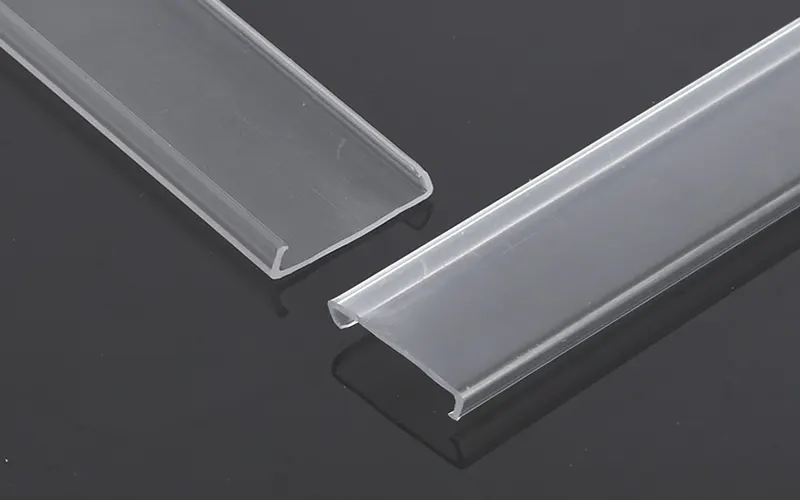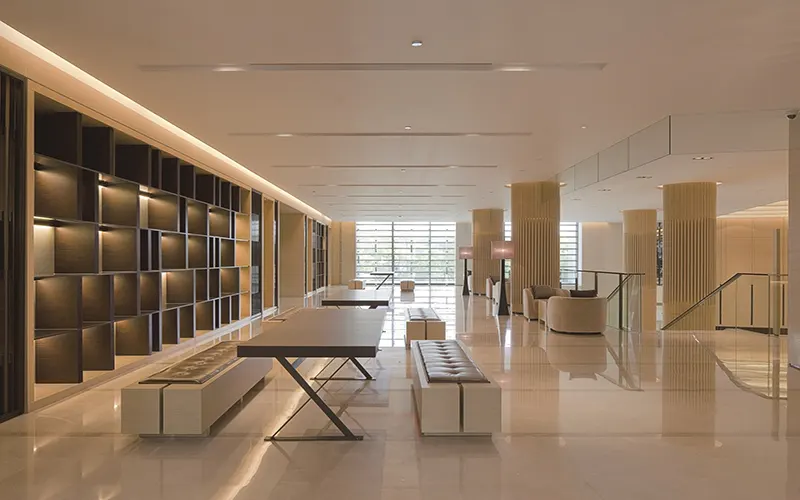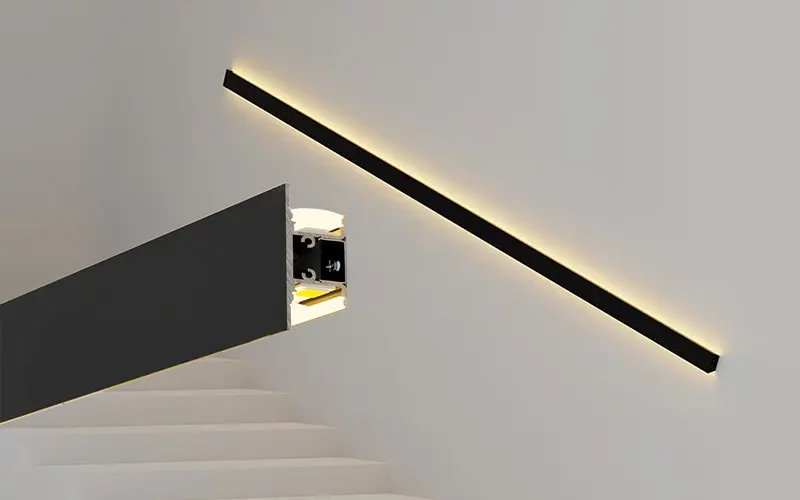
En choisissant Profils LED pour vos barrettes de LED, nous oublions souvent le couvercle des LED. Il ne s'agit pas seulement d'une couche protectrice, mais d'un facteur déterminant de la qualité de la lumière. Les concepteurs et les installateurs ont souvent du mal à choisir entre les trois principaux matériaux de couverture des LED. Types de couvercles de PC à LED: couvercles LED transparents, givrés et opalins.
Aujourd'hui, nous nous concentrerons sur la teinte LED claire, réputée pour sa transmission de la lumière et sa clarté maximales, représentant la recherche ultime de la luminosité et du détail de la lumière. Cependant, ce choix n'est pas sans poser de problèmes. Cet article vous aidera à comprendre systématiquement les caractéristiques, les avantages, les inconvénients, les scénarios applicables et les points clés de la sélection des abat-jour à LED transparentes, afin de vous aider à choisir le type d'abat-jour le plus adapté à votre projet.
Qu'est-ce qu'une couverture aluminium LED transparente ?
Un abat-jour LED transparent est un couvercle de protection pour les bandes lumineuses LED avec une transmission lumineuse très élevée, généralement en PC (polycarbonate), PMMA (acrylique) ou silicone.
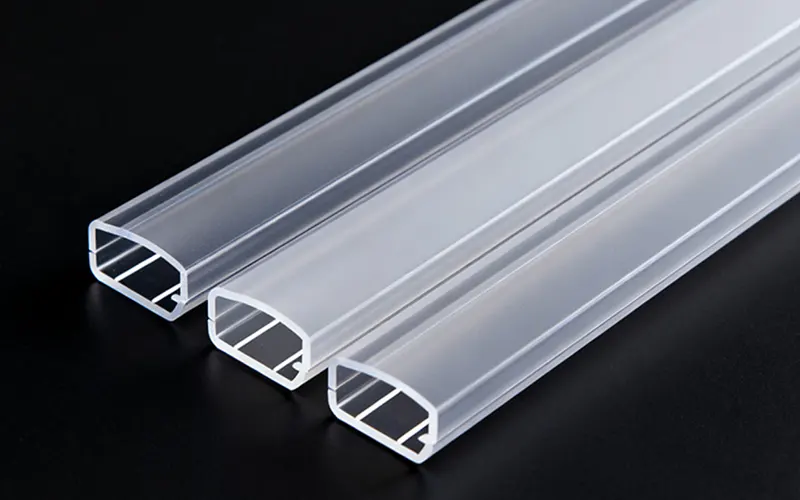
Contrairement aux abat-jour givrés ou blanc laiteux, les abat-jour transparents ne diffusent pratiquement pas la lumière. Ils sont conçus pour laisser passer autant de lumière que possible dans sa forme et son angle d'origine, en préservant les caractéristiques de faisceau inhérentes à la bande LED.
Les caractéristiques de la couverture aluminium LED transparente sont les suivantes
- Maximiser le rendement lumineux: Il s'agit de l'objectif le plus important, qui nécessite la plus grande efficacité lumineuse pour fournir la lumière la plus brillante.
- Protection physique: Protéger la réglette lumineuse de la poussière, de l'humidité et des dommages physiques.
- Maintenir la clarté: Ne pas modifier l'angle de rayonnement ou la couleur des puces LED.
Quelles sont les meilleures applications pour les couvertures aluminium à LED transparentes ?
Les couvercles LED transparents (également connus sous le nom de diffuseurs transparents) sont généralement utilisés dans des scénarios exigeant un rendement lumineux maximal, une couleur de lumière fidèle et des effets d'éclairage précis. Par rapport aux abat-jour blanc laiteux, les couvercles transparents diffusent moins de lumière et retiennent donc plus de flux lumineux pour un éclairage plus clair et plus lumineux.
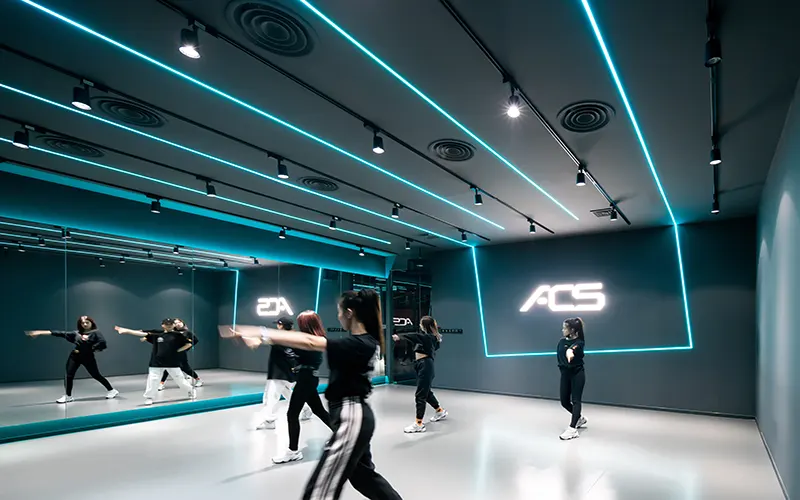
Luminosité maximale Zone de sortie
L'un des principaux avantages des abat-jour transparents est qu'ils ne réduisent pratiquement pas le flux lumineux des LED. Par rapport aux abat-jour givrés ou blanc laiteux, ils réduisent la perte de lumière, ce qui permet aux luminaires à LED d'atteindre une plus grande efficacité lumineuse.
- Ligne de production de l'usine Éclairage
- Feux de travail des équipements et des machines
- Éclairage de l'établi
- Éclairage d'étagère d'entrepôt
- Éclairage temporaire de chantier
Dans ces environnements, la luminosité et l'efficacité sont plus importantes que la douceur. Un abat-jour transparent permet d'utiliser pleinement la lumière des LED et d'obtenir un éclairage maximal.
Éclairage des vitrines commerciales et des magasins
Dans les environnements d'exposition commerciale, l'éclairage ne doit pas seulement être lumineux, il doit aussi maintenir une température de couleur réelle et une bonne clarté visuelle. Les abat-jour transparents ne modifient pas la température de couleur ou la couleur des LED, ce qui permet à la marchandise de présenter un aspect plus naturel.
- Eclairage de comptoir de bijouterie
- Vitrines d'horlogerie et de luxe
- Éclairage des vitrines de centres commerciaux
- Présentoirs de téléphones mobiles et de produits électroniques
- Vitrines de musée
Dans ces scénarios, la reproduction réaliste des couleurs et la clarté des détails peuvent considérablement améliorer l'attrait et la présentation d'un produit. Les clients peuvent ainsi voir le produit plus clairement.
Espaces professionnels nécessitant un contrôle précis des faisceaux
Certains environnements professionnels exigent un degré élevé de directionnalité et de précision de la lumière. Les abat-jour transparents permettent de conserver l'angle de rayonnement d'origine des LED, ce qui rend la lumière plus ciblée.
- Systèmes d'éclairage de studio
- Éclairage des paillasses de laboratoire
- Éclairage pour les essais industriels et l'inspection de la qualité
- Postes de travail de réparation électronique
- Lignes de production d'assemblage de précision
Les couvercles transparents en PC fournissent une lumière claire, ciblée et contrôlable, améliorant l'efficacité du travail et réduisant les erreurs visuelles.
Scénarios d'éclairage à indice de rendu des couleurs élevé (CRI) (CRI90+ / CRI95)
Pour les projets d'éclairage nécessitant un indice de rendu des couleurs élevé (IRC élevé), les abat-jour transparents sont souvent le choix idéal. En effet, ils n'introduisent pas de dispersion supplémentaire de la lumière ou de changement de couleur, tout en préservant le plus possible la reproduction des couleurs réelles des LED.
- Éclairage des musées et galeries d'art
- Magasins de vêtements haut de gamme
- Vitrines cosmétiques
- Éclairage pour la photographie et la production vidéo
- Conception de l'éclairage d'un studio
Dans ces environnements où la reproduction de scènes réalistes est requise, une reproduction précise des couleurs est cruciale pour mettre en valeur les détails des œuvres d'art ou des produits.
Éclairage extérieur et résistant aux intempéries
Pour les projets d'éclairage extérieur, les abat-jour en silicone transparent ou en PC transparent offrent généralement une meilleure résistance aux intempéries et une meilleure durabilité. De nombreux abat-jour transparents de haute qualité possèdent les caractéristiques suivantes :
- Éclairage du contour des façades architecturales
- Éclairage paysager
- Éclairage des ponts et des rampes
- Luminaires linéaires d'extérieur
- Éclairage des parcs et des sentiers
Il peut être utilisé à l'extérieur, et ses propriétés d'étanchéité et de résistance au jaunissement garantissent que le luminaire conserve une bonne transmission de la lumière et des effets d'éclairage stables, même après une utilisation extérieure de longue durée.
Pourquoi utiliser une couverture aluminium LED transparente ?
Les abat-jour LED transparents offrent des avantages que les autres abat-jour ne peuvent égaler. Ils possèdent également des propriétés spécifiques uniques.
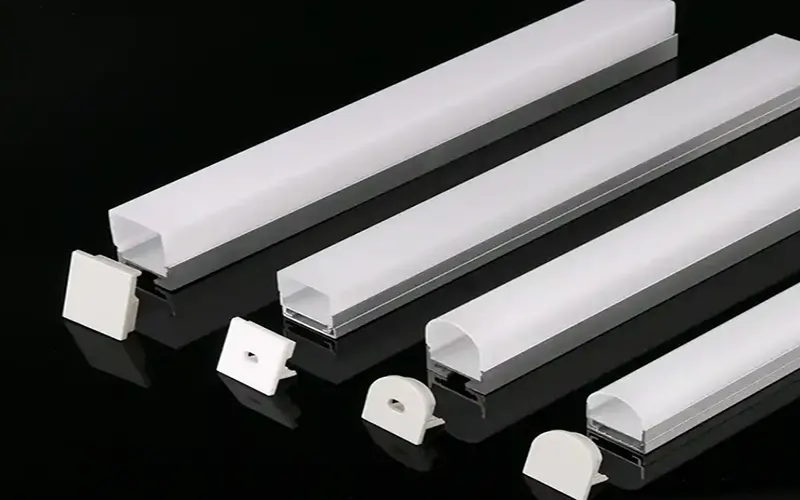
- Transmission de la lumière la plus élevée (90-95%) : Pratiquement aucune perte de lumière, ce qui en fait le choix optimal pour l'optimisation de la luminosité.
- Rendu de luminosité plus élevé : N'affecte pas la couleur de la lumière, la tache lumineuse ou la luminosité.
- Structure avantageuse de la puce LED : Affiche directement les changements de couleur des LED pour les bandes lumineuses RVB, RVBW ou à pixels.
- Plus grande durabilité grâce à la structure en PC : Résistant aux chocs et à la chaleur, il est moins susceptible de se casser.
Couverture transparente vs. couverture diffuseur vs. couverture opale - Quand choisir une couverture transparente pour PC ?
| Caractéristiques | Transparent Couverture | Couvercle du diffuseur | Couverture opale |
| Transmission de la lumière | 90% - 95% (Extrêmement élevé) | 80% - 90% (Haut) | 75% - 85% (Moyen) |
| Effets de lumière | Clair, haute luminosité, directionnel | Douceur, légère dispersion, bonne uniformité | Très uniforme, pas de points lumineux, lumière douce |
| Toute tache lumineuse | Haute visibilité | Faible visibilité (en fonction de la densité de la bande LED) | Pratiquement invisible |
| Risque d'éblouissement | Haut | Moyen | Faible |
| Objectif de l'éclairage | Priorité à la luminosité, longue distance, éclairage d'appoint | Pour l'éclairage général d'intérieur, l'uniformité est souhaitée. | Zone de vision directe, pour un confort visuel optimal |
Si votre objectif principal est la luminosité, un abat-jour transparent est le meilleur choix. Si votre objectif est le confort visuel et que la lampe est installée au niveau des yeux ou en dessous, choisissez un abat-jour blanc laiteux. En revanche, si vous avez besoin d'un compromis entre les deux (un certain niveau de luminosité et une meilleure uniformité), choisissez un abat-jour dépoli.
Quand faut-il recouvrir l'aluminium de LED transparentes ?
Bien que les abat-jour LED transparents offrent des avantages tels qu'une transmission lumineuse élevée et une luminosité maximale, ils ne constituent pas le choix idéal pour certains scénarios d'éclairage. Si un projet privilégie le confort visuel, une lumière douce ou un éclairage uniforme, un abat-jour transparent peut imposer certaines limites.
Espaces nécessitant un éclairage doux
Dans les environnements qui mettent l'accent sur une atmosphère confortable et une expérience relaxante, une lumière trop directe et trop vive peut donner une impression de dureté ou d'inconfort. Ces espaces ne conviennent pas à l'éclairage d'une chambre à coucher, à l'éclairage d'ambiance d'un salon, à une chambre d'hôtel, à un coin salon ou à un coin lecture, à un spa ou à un espace de relaxation.
Désir de dissimuler les lampes LED à points
Les abat-jour transparents ne peuvent pas bloquer efficacement les points des LED, de sorte qu'après l'installation de la bande lumineuse, l'effet de point de chaque LED est généralement clairement visible. Cet effet de point est encore plus prononcé si l'espacement entre les LED est important. Ces applications ne sont pas recommandées : éclairage linéaire intérieur haut de gamme, conception de bandes lumineuses dissimulées dans des espaces commerciaux et éclairage d'hôtels ou de clubs haut de gamme.
Éclairage indirect de grande surface pour les plafonds ou les murs
Lorsque des bandes lumineuses à LED sont utilisées pour l'éclairage indirect de gouttières ou de murs, l'uniformité de la lumière est souvent plus importante que la luminosité. Si des abat-jour transparents sont utilisés, les points lumineux des bandes peuvent créer un éblouissement perceptible sur les murs ou le plafond, ce qui affecte l'effet visuel global.
Lieux où les exigences en matière de confort visuel sont élevées
Certains espaces publics ou environnements professionnels ont des exigences élevées en matière de confort visuel et de contrôle de l'éblouissement. Les abat-jour transparents peuvent rendre la luminosité des LED trop directe, augmentant ainsi le risque d'éblouissement. Exemples : hôpitaux et espaces médicaux, écoles et établissements d'enseignement, bibliothèques.
Conclusion
Les couvercles LED transparents conviennent à tous les projets d'éclairage professionnel nécessitant une luminosité élevée, une couleur de lumière fidèle et une efficacité lumineuse maximale. Elles sont donc idéales pour l'éclairage d'étalage, l'éclairage commercial et l'éclairage industriel. Toutefois, si le projet met l'accent sur le confort ou un effet impeccable, des abat-jour givrés ou blanc laiteux peuvent être plus appropriés.
Si vous avez besoin d'abat-jour transparents ou de manchons en silicone transparents pour les profilés d'éclairage LED en aluminium, ou si vous souhaitez obtenir des conseils professionnels sur les bandes LED correspondantes, n'hésitez pas à nous contacter. nous contacter.
FAQ
La plupart des abat-jour LED transparents ont une transmission lumineuse comprise entre 90% et 95%, ce qui permet de préserver au maximum la luminosité d'origine de la bande LED. Bien entendu, les différents matériaux tels que le PC, le PMMA ou le silicone entraînent de légères variations de la transmittance.
Les abat-jour transparents n'offrant pratiquement aucune diffusion, ils peuvent en effet provoquer plus facilement des éblouissements lorsqu'ils sont associés à des barrettes de LED plus espacées les unes des autres. Toutefois, l'utilisation de bandes de LED COB ou à haute densité réduit considérablement l'éblouissement.
Non. Les propriétés de transmission de la lumière d'un abat-jour transparent signifient qu'il ne modifiera pas la couleur ou la température de couleur de la lumière, ce qui le rend idéal pour les scénarios exigeant une grande fidélité des couleurs, tels que les présentoirs de produits.
Un couvercle de PC transparent est plus lumineux parce qu'il n'a pas de couche de diffusion, ce qui permet à la lumière d'être presque sans obstacle. Les abat-jour givrés et blanc laiteux réduisent légèrement la luminosité en échange d'un effet de lumière plus doux.
La hauteur d'installation sous les meubles légèrement inférieurs étant généralement très basse, l'œil humain peut facilement regarder directement le luminaire. Un abat-jour transparent exposera directement la puce LED lumineuse, ce qui provoquera un fort éblouissement et une gêne visuelle.