LED profiles, serving as accessories and heat sinks for LED strip lights, are widely used in residential and commercial settings. To enhance the versatility of LED strip lights, most are paired with LED profiles. However, a common question from lighting users is whether LED Aluminum Profiles affect the brightness of LED Strips. And what factors should be considered when choosing the appropriate profile.
What are LED Aluminum Profiles?
First, it’s crucial to understand LED aluminum profiles and their role in LED strip lighting systems.
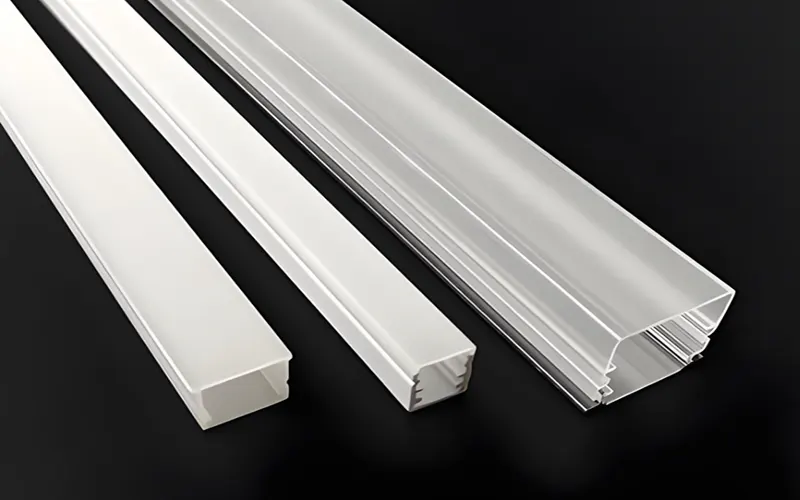
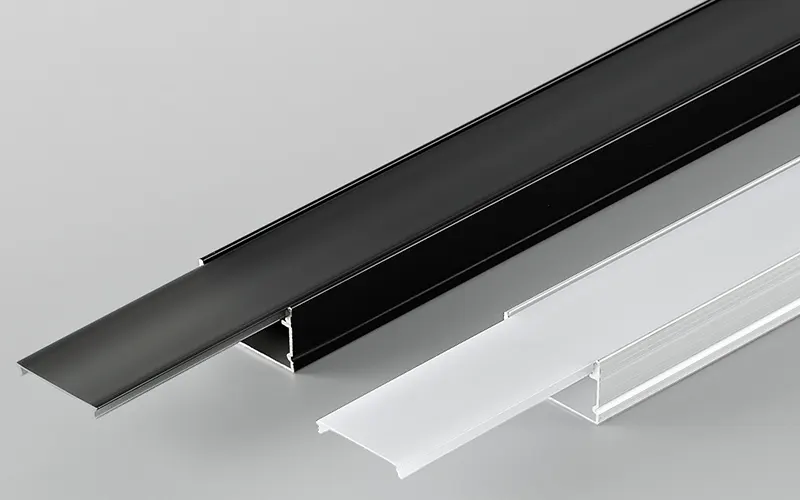
LED aluminum profiles, also known as LED channels or extrusions, are often accompanied by PC covers and end caps, forming a complete set of aluminum profiles. They are mounting enclosures specifically designed for LED strip lights. They offer the following advantages:
- LED profiles act as heat sinks, effectively dissipating the heat generated by LED strip lights. This heat management extends the lifespan of the LEDs and improves their efficiency.
- They provide physical protection for the LED strips, preventing exposure to dust, debris, and impacts.
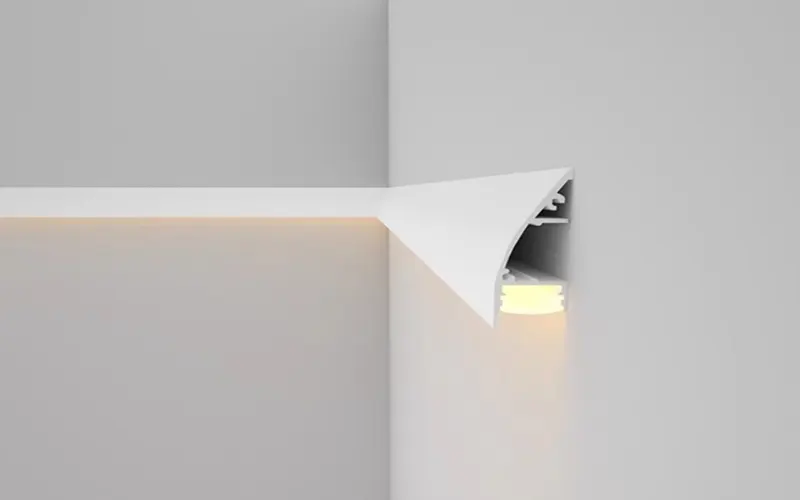
- LED profiles add a professional and aesthetically pleasing finish to LED strip installations, allowing for both suspended and recessed mounting. This provides more possibilities for LED strip lighting.
How LED Aluminum Profiles affect the brightness of LED Strips?
If LED strip lights are used with LED profiles, the design and dimensions of the aluminum profile will also affect the light output.
Deeper profiles can distribute light more evenly and reduce glare. But this may result in a slight decrease in perceived brightness due to the increased distance between the LED strip and the diffuser.
Similarly, the width and position of the LED strip within the profile will also affect brightness. For example, narrower profiles can concentrate light into a smaller area, creating a more focused beam.
Conversely, wider profiles can produce a broader, more diffused light output. Understanding the specific lighting requirements of your project will help you choose the appropriate profile design to balance brightness and aesthetic considerations.
How Do LED PC Diffusers Affect LED Strip Light Output?
Besides the impact of LED aluminum profile depth that we just analyzed. One of the most important factors affecting brightness is the type of diffuser used with the profile.
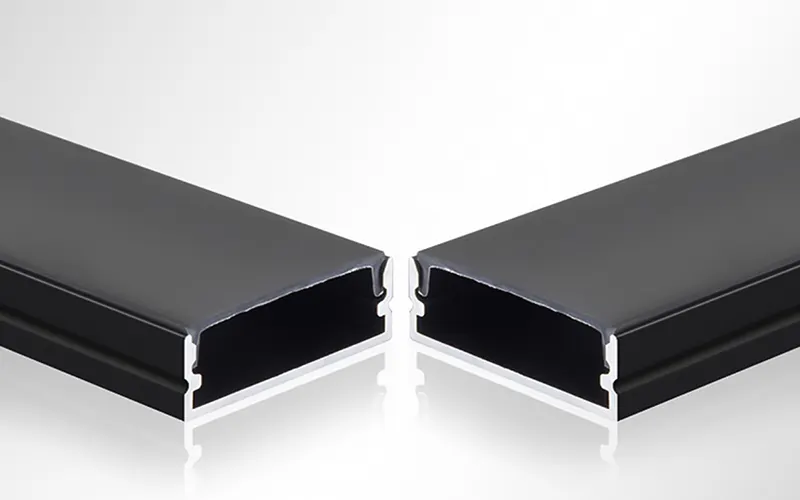
Diffusers are typically made of PC material and placed over the LED strip to diffuse the light, resulting in a softer, more even lighting effect. However, not all diffusers perform the same.
- Clear diffusers: Transparent diffusers allow most of the light to pass through, but may result in noticeable hotspots, making each individual LED bead more visible. Therefore, high-density LED strips should be chosen to avoid noticeable light spots.
- Frosted diffusers: A frosted diffuser is slightly better than a transparent one, as it diffuses light more evenly, but it will slightly reduce brightness.
- Opal diffusers: Opal diffusers produce the softest and most even light, but are typically slightly dimmer than frosted diffusers. They may reduce perceived brightness the most, but also provide the most uniform light distribution.
If maximum brightness is your primary consideration, a clear diffuser will retain most of the LED strip’s original brightness. For applications requiring even light distribution and aesthetic appeal, a frosted or opal diffuser might be a better choice, even though it will slightly reduce light intensity.
How to Choose LED Strips for LED Profiles?
In fact, the choice of aluminum profile and PC cover does have some impact on the brightness of the LED strip. However, the LED strip itself is also a significant factor. Factors such as LED density, color temperature, and power all significantly affect the brightness level.
For example:
- Always choose high-density LED strips. These contain more LED beads per meter, thus producing brighter light, and the light spots are less noticeable when using a diffuser.
- Color temperature affects the brightness perceived by the human eye. Even with the same lumen value, cool white LEDs (e.g., 6000K) will appear brighter than warm white LEDs (e.g., 3000K).
- Power per meter is directly related to brightness. Higher power LED strips generally produce more light, but also generate more heat, making heat dissipation through the aluminum profile particularly important.
Light Diffusion is Crucial
In all lighting projects, even light distribution is more important than achieving maximum brightness. For example, in retail displays, accent lighting, and architectural lighting, creating soft, even light is crucial to avoid harsh glare or hotspots. In these cases, using frosted or opal diffusers with LED aluminum profiles can improve the overall visual effect, even if it slightly reduces brightness.
On the other hand, in task lighting or areas requiring high brightness (such as workspaces or kitchens), clear diffusers or shallow profiles may be more suitable, maximizing light output while still utilizing the protective and heat dissipation properties of the aluminum profile.
Conclusion
LED Aluminum Profiles affect the brightness of LED Strips, depending on factors such as the depth of the LED profile, the type of diffuser cover, and the quality of the LED strip. For most applications, the slight reduction in brightness caused by using frosted or milky white diffuser covers is negligible compared to the benefits of more uniform light distribution and better heat dissipation. For more high-quality LED profiles, please contact us.