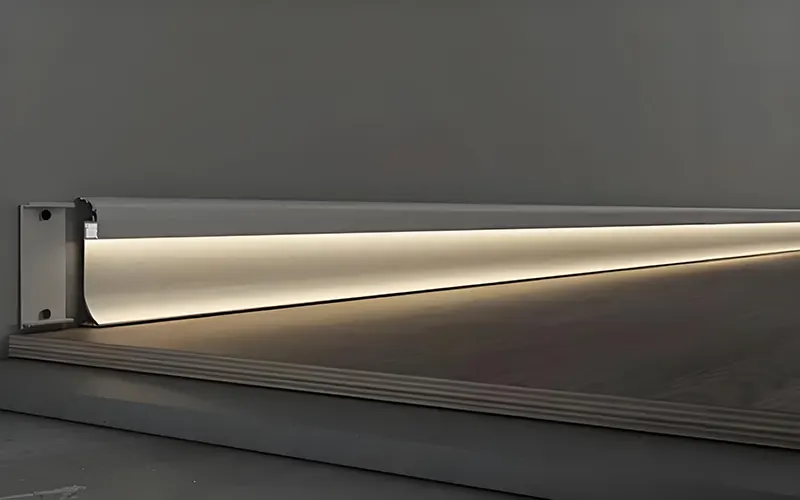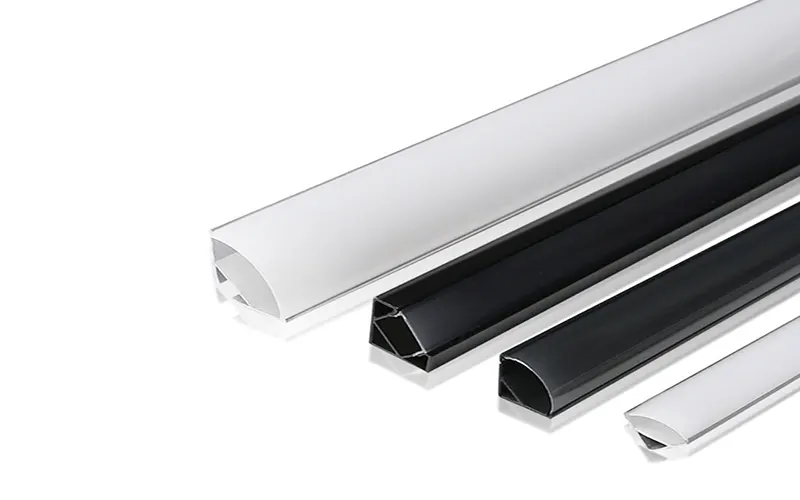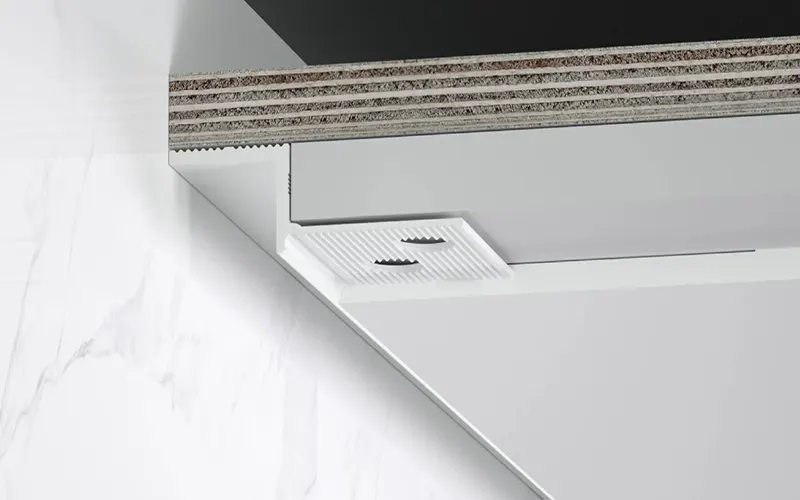
As interior design styles increasingly embrace minimalism, darker tones, and spatial integration, people’s demands for the aesthetics of lighting systems are also rising. Compared to traditional silver aluminum profiles, black LED aluminum profile are gradually gaining popularity. Due to their characteristics of “concealing the light source and minimizing its presence,” they have become a top choice for design firms, furniture manufacturers, decoration companies, and retail brands.
This article will delve into why the market demand for black LED aluminum profile is surging, analyze their irreplaceable core advantages, and provide you with clear usage opportunities, comparison guidelines, and construction points to help you make the most professional choice for your next project. More information, pls read Why Choose Black LED Profiles and Covers?
Why Choose Black LED Aluminum Profile?
Black LED aluminum profiles are a new material color, designed for specific areas. Primarily used in indoor lighting areas, they create a high-end and cool aesthetic.
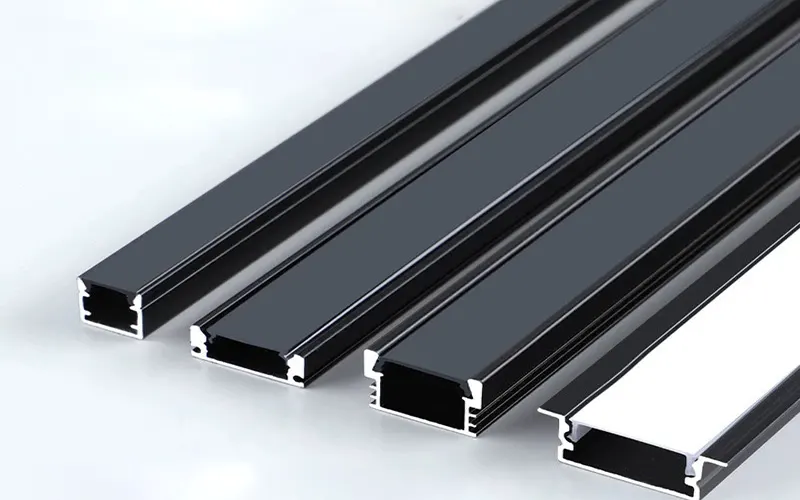
Superior Reflective Control
The black surface has a matte finish, avoiding the light reflection that can occur with traditional silver profiles, resulting in softer, cleaner light.
Highly concealed, not visually obtrusive
In dark spaces, the profile itself is almost invisible, creating a “light flowing naturally from the wall/ceiling” effect. This glossy effect is excellent.
Perfectly integrates various materials
Including wood veneer, sintered stone, wrought iron frames, black glass, electroplated metal, etc. It can blend perfectly with them, creating a harmonious and bright look.
Highly wear-resistant and oxidation-resistant
Black surface treatments typically employ sandblasting oxidation or electrophoresis processes, making them more scratch-resistant and fingerprint-resistant than ordinary silver.
Enhancing the overall spatial quality
Especially in high-end commercial spaces, black profiles can significantly improve the modernity and professionalism of the space.
When Should Black LED Aluminium Profile Be Used?
Black LED aluminum profiles are not just a color choice, but also a “tool for invisible lighting design.” In the following scenarios, they can significantly enhance the texture and lighting environment of a space:
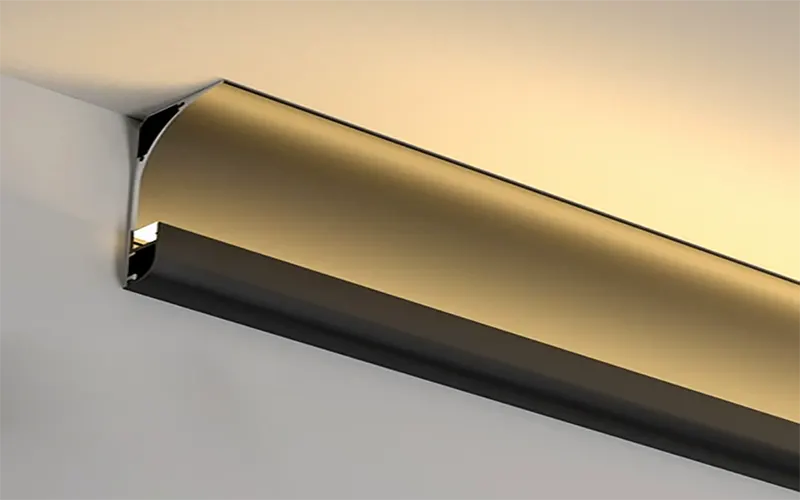
Dark Ceiling / Black Suspended Ceiling
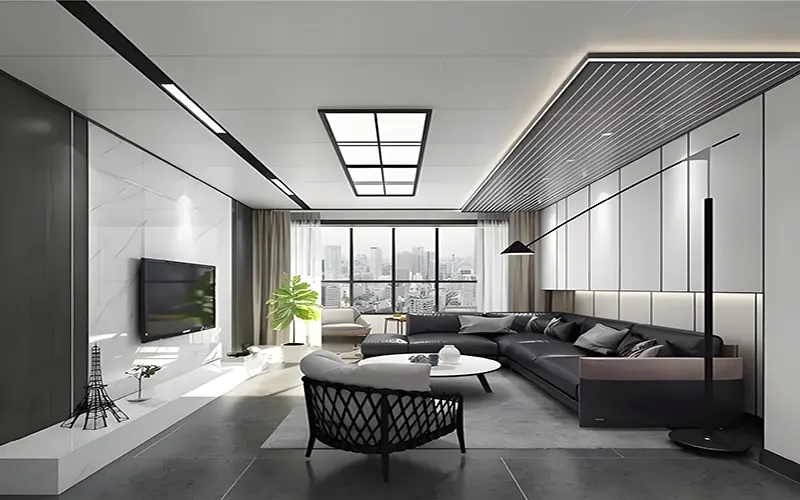
In black or dark gray suspended ceilings, using black profiles allows light fixtures to almost completely blend into the background, leaving only the light itself visible. Commonly seen in: office spaces, commercial spaces, chain stores
Application Effect:
- You can’t see the “light,” only the “light”
- Avoids obvious reflective lines from silver profiles on the ceiling
- Enhances the overall sophistication of the space
Wood Veneer or Dark-Colored Furniture (Wardrobes / Cabinets / Display Cases)
If your cabinetry is constructed from dark-toned materials—such as walnut or dark oak—black profiles appear far more “invisible” than silver ones.
Application Effects:
- The light channel integrates seamlessly with the furniture structure.
- When illuminated, the light is soft, uniform, and unobtrusive.
- When switched off, the fixture is virtually invisible.
Iron Frames / Metal Structures (Industrial & Minimalist Styles)
In black ironwork, steel structures, or modern minimalist designs, black profiles maintain a consistent design language. Primarily used in loft spaces and commercial display structures.
Application Effects:
- Seamlessly integrated with the black metal structure
- Enhancing the lines, not disrupting the design
- Conforming to the “low-interference” design logic of industrial and minimalist styles
Showrooms / Shopping Malls / High-End Retail Spaces
In spaces emphasizing “visual priority for merchandise,” lighting fixtures themselves must be minimized. Primarily used in luxury stores, jewelry stores, and car showrooms.
Application Effects:
- Reduces visual interference from lighting fixtures
- Focuses customer attention on merchandise
- More “professional” lighting, cleaner space
Areas with high anti-glare requirements (Office/Reading Spaces)
Black surfaces effectively reduce light reflection, thus reducing glare. Widely applicable in offices and libraries.
Application Effects:
- Reduces discomfort when looking directly or from the side
- Improves visual comfort during extended work sessions
- Softer light and more precise control
Black vs. Silver Aluminum LED Profile: How to Make the Right Choice?
Choosing between black and silver (or white) LED profiles is a philosophical question of “subtraction” and “integration”:
| Feature Comparison | Black Aluminum LED Profile | Silver/White LED Aluminum Profile |
| Visual effects | It absorbs light, making it visually invisible or emphasizing lines. | It reflects light and blends seamlessly with the walls/ceiling. |
| Glare control | Excellent; the black inner wall reduces internal reflections. | Generally, stray light at the edges may occur. |
| Applicable Environment | High contrast, dark background, minimalist design. | Light-colored background, area where maximum light output is needed. |
| Design Concept | Emphasize the light itself and conceal the light fixtures. | Emphasis is placed on flatness and the integrity of the space. |
If your design goals are minimalism, glare suppression, high contrast, and a dark background, then black is the obvious choice. If your goal is to maximize diffused lighting and blend seamlessly into a light-colored ceiling, then silver or white is more suitable. Read more, pls check White or Black LED Aluminum Profiles: Which is Right for Your Project?
Construction Precautions for Using Black Profiles
While black profiles offer aesthetic advantages, the following characteristics should be considered during construction and installation:
- Surface Protection: The black anodised or painted finish is susceptible to visible scratches. During handling and installation, gloves must be worn, and protective film must be applied to prevent contact with sharp tools or cement mortar.
- Accessory Consistency: Only the corresponding black end caps, connectors, and clips may be used. The use of any white or silver-colored accessories will compromise the intended “invisible” aesthetic.
- LED Strip Heat Dissipation: The heat dissipation efficiency of the black profile is equivalent to that of standard aluminum profiles; however, when installing LED strips, ensure that the underside of the strip makes full contact with the profile to facilitate effective heat conduction.
- Power Cable Concealment: For surface-mounted installations, power cables entering the profile should utilize black sheathing or be pre-embedded to prevent white wiring from detracting from the overall black visual aesthetic.
Conclusion
Black LED aluminum profile, with their superior concealment, sophisticated visual appeal, and wide adaptability. They are increasingly becoming the mainstream choice for modern commercial spaces, dark interior designs, and high-end projects. Whether your project is a showroom, office building, wood veneer furniture, or brand store, black profiles deliver a cleaner, linear lighting effect and a more professional spatial presentation.
Download the catalogue now: Ensure your next design project perfectly utilizes black profiles!
FAQs
No. The heat dissipation capacity of LED aluminum profiles primarily depends on the material, thickness, and surface area of the aluminum. The black treatment layer from anodizing (or spraying) is very thin, and its hindering effect on the thermal conductivity of the aluminum is negligible.
Yes, the procurement cost of black profiles is generally higher than that of standard silver or white profiles. This is because the blackening process (such as anodizing) is an additional, more refined production step.
Yes, they are indeed more difficult to repair. Due to the high contrast of black, any minor scratches or dents will be more noticeable on a black surface than on a silver surface (especially brushed silver).
Yes, we support custom profiles in various RAL color codes. For black and white, there is a MOQ (Minimum Order Quota).
In a minimalist space with white or light-colored as the main color scheme, or for projects with an extremely limited budget (black finishes may be slightly more expensive).