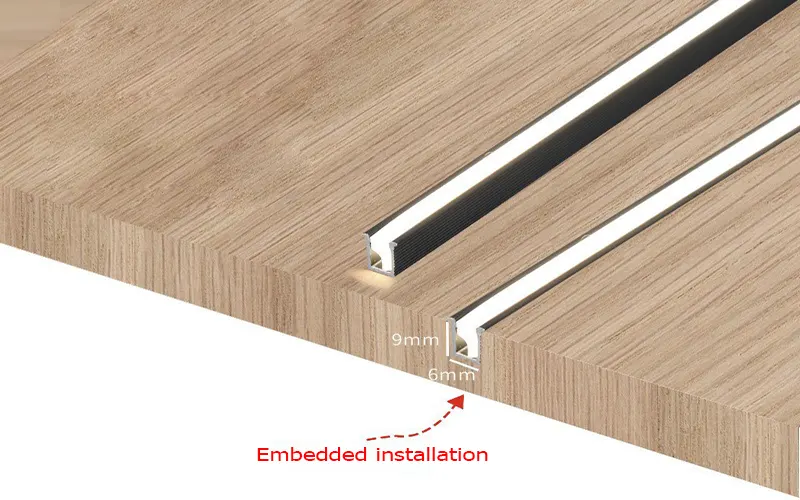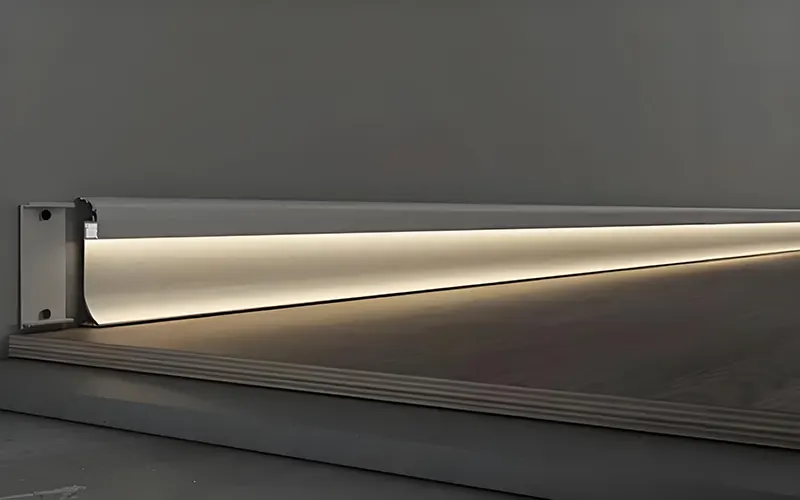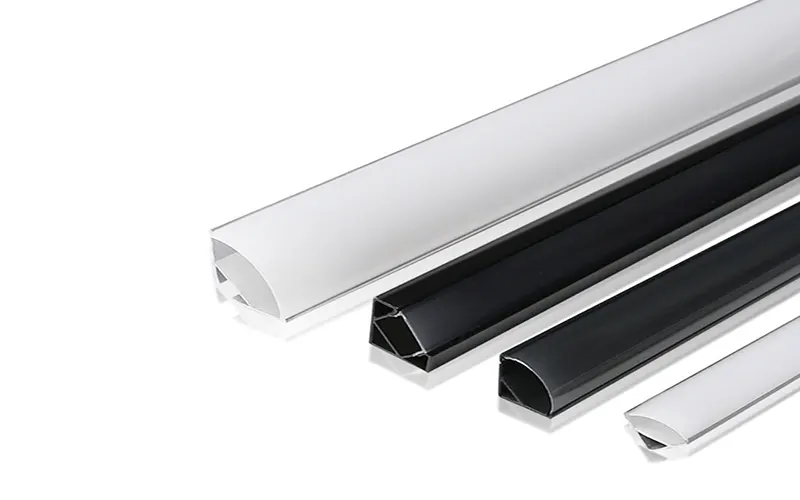
Modern lighting is both simple and high-tech. Instead of emanating from a standard, tangible fixture, the light flows from within walls, ceilings, or floors as a continuous, seamless band—this is the appeal of recessed LED profiles. More details, pls read Understanding Recessed LED Strip Profiles
Recessed LED profiles can use for flush with drywall, woodwork, or cabinetry surfaces, blending seamlessly into the structure. Here are five of the best applications for recessed LED strips.
1. Recessed LED Profiles for Drywall Ceilings
Ceilings provide an excellent canvas for showcasing recessed LED lighting and LED strip effects. When LED profiles are installed flush with the drywall, the profiles themselves become virtually invisible, leaving only a continuous band of light.
Best profile types for ceilings: V-shaped aluminum profiles (for corner installations) or flanged profiles (for flat ceiling surfaces).
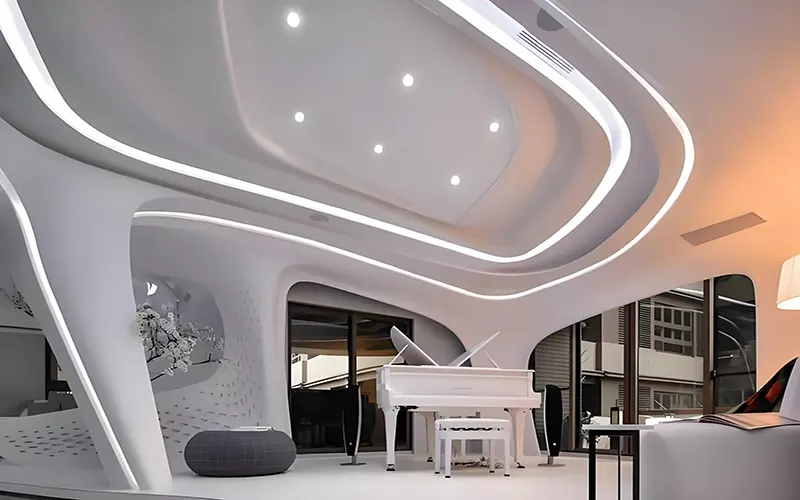
1: Floating Perimeter Light Cove
Discard traditional crown molding in favor of recessed LED profiles installed at the ceiling’s edge, angled at 45 degrees to cast light toward the center. This “floating” effect creates the visual illusion of a higher, airier ceiling—ideal for living rooms, master bedrooms, and home theaters.
2: Tray Ceiling Accents
For a tray ceiling design (featuring a recessed central area), recessed profiles can be installed along the vertical inner face of the recess. Directing the light upward or downward effectively highlights the ceiling’s layered structure.
3: Crisscross or Linear Grid Patterns
For a minimalist look, profiles can be recessed directly into the drywall, arranged in parallel lines or a crisscross grid pattern. Paired with dimmable LED strips, the atmosphere can be flexibly adjusted, shifting from bright, functional lighting to soft ambient light.
Professional tip for drywall installation: It is best to use profiles with flanges (wings). This allows the plasterer to cover the flange with joint compound and level it out, ensuring the profile sits perfectly flush with the ceiling surface.
2. Integrating LED Strips into Living Room Walls
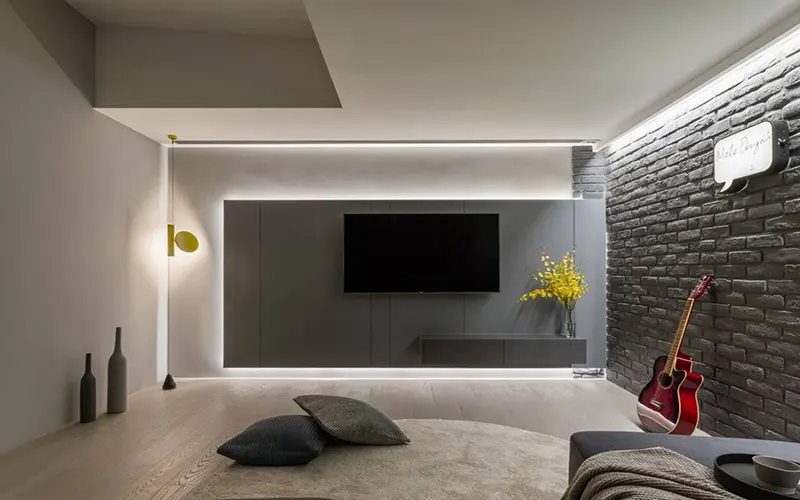
Walls act as vertical canvases; recessed LED light channels can transform them into striking visual focal points, creating a beautiful feature.
1: Vertical Light Columns
Install two or three recessed LED channels vertically on either side of a fireplace, TV, or large piece of artwork. These vertical lines draw the eye upward, visually enhancing the height of a standard 8-foot (approx. 2.4-meter) ceiling.
2: Wall-Washing Lighting Behind the TV Unit
Embed a horizontal light channel into the wall behind the TV unit, approximately 8 to 12 inches (20 to 30 cm) above the floor, to cast light upward. This design creates a soft “wall-washing” effect that reduces eye strain when watching TV in a dark room while adding a cinematic atmosphere.
3: Textured Feature Walls
Do you have a feature wall made of brick, stone, or reclaimed wood? Consider recessing a lighting channel either vertically or horizontally into the adjacent drywall to cast light onto the wall surface. The light will graze the rough surface, highlighting every detail of its texture and grain.
3. Recessed Floor and Stair Lighting
Floor lighting is a “secret weapon” for creating ambiance in luxury hotels and modern residences. When designed effectively, recessed LED profiles in floors or staircases not only ensure safety—by illuminating potential tripping hazards—but also lend the space striking architectural beauty.
1: Stair Tread Edge Lighting
Embed slim LED profiles into the riser (vertical section) of each step—specifically, beneath the overhanging edge of the tread. Light is cast downward onto the step below, clearly outlining the edge of each step.
2: Corridor Lighting
Install recessed profiles in the floor along both sides of the long corridor, positioned approximately 4 inches (about 10 cm) away from the walls. Pair with motion sensors to enable automatic lighting at night.
4. Functional Lighting for Kitchens and Bathrooms
Kitchen and bathroom spaces require lighting solutions that balance aesthetics with practicality. Recessed LED profiles are an ideal choice, as they provide glare-free illumination while fitting perfectly into tight spaces.
1: Under-cabinet task lighting
Profiles can be recessed into the underside of wall-mounted cabinets so they sit flush with the surface; paired with an opal (milky-white) diffuser, this creates uniform lighting across the entire countertop, ensuring the food preparation area remains free of shadows.
2: Interior Lighting for Glass Cabinets or Pantries
Embed an ultra-slim (6mm) LED profile into the rear inner edge of the cabinet shelves, allowing light to project forward through the displayed items. Use a clear diffuser for maximum brightness, or an opal diffuser to create a soft, sophisticated ambiance reminiscent of a high-end jewelry display.
3: Bathroom Mirror Lighting (Glare-Free)
Compared to overhead light strips, placing vertical light sources on both sides of the bathroom mirror yields superior visual results. You can vertically embed two lighting profiles into the wall, positioned 2–3 inches (approximately 5–8 cm) from the mirror’s edges. This allows the light to illuminate the face evenly from both sides, avoiding the unsightly shadows beneath the eyes and chin often caused by overhead lighting.
5 Commercial and Retail Applications
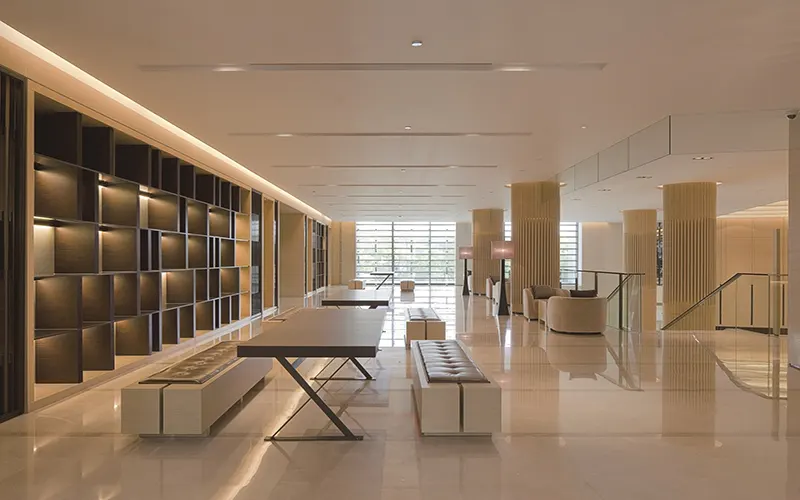
Incorporating recessed LED profile lighting into commercial and high-end architectural spaces not only enhances the perceived quality and value of products but also improves wayfinding and reduces maintenance costs.
1: Backlit Reception Desk
The reception desk serves as the primary visual focal point for visitors entering the space. Profiles can be recessed horizontally into the wall behind the desk or vertically into the front panel of the desk itself. Designers of office spaces often pair this feature with backlit brand signage.
2: Retail Display Shelving
For clothing or luxury goods displays, ultra-slim profiles can be embedded into the front edge of each shelf. Light is projected downward onto the merchandise, creating a spotlight effect without the need for separate track lighting.
3: Wayfinding Lighting for Hotel Corridors
Continuous LED profiles are recessed into the floor (or the wall at skirting-board height) along one side of the corridor. This design clearly delineates the path to emergency exits, elevators, and guest rooms while avoiding the harsh glare of overhead lighting. Additionally, it creates a sophisticated, high-end atmosphere.
How to Choose the Right Recessed LED Profile (Size, Depth, & Diffuser Guide)?
1: Recessed LED Profile Depth
The depth of the LED profile needs to be considered; the deeper it is, the easier it is to achieve glare-free lighting effects.
- Minimum Depth Principle: The groove depth should be at least 1.5 times the width of the LED strip. For example, for a 10mm wide strip, a groove depth of at least 15mm should be used.
- To avoid hotspots: Use profiles with a depth of 20mm or more, paired with a thick, milky white/semi-transparent diffuser. The extra space allows the light to mix thoroughly before emission.
- Shallow Profiles (8–10mm): Only suitable for high-density COB (Chip-on-Board) strips, which provide continuous light without visible breaks.
2: Diffuser Types (Transparent, Milky White, Black)
- Transparent Diffuser: Highest brightness (over 95% light transmittance). Best suited for areas requiring strong lighting, such as under cabinets or inside display cases.
- Milky White Diffuser: Soft and even light (70-80% light transmittance). Best suited for living rooms, ceilings, and any area where the light source is directly visible. Eliminates glare.
- Black Diffuser: Almost invisible when lights are off; very narrow beam. Suitable for theaters, media rooms, or any area where the light source needs to be completely hidden when turned off.
3: Profile Width & LED Strip Compatibility
The inner width of the profile must perfectly match the width of the LED strip. You can refer to the following commonly used dimensions:
- 8mm inner width: Suitable for 6mm or 8mm LED strips.
- 12mm inner width: Suitable for 10mm LED strips (the most common type for household use).
- 15mm and above inner width: Suitable for high-power 12mm or 14mm LED strips for commercial applications.
Material and Surface Treatment
6063 Aluminum Alloy (best thermal conductivity). Anodized (not painted) surface treatment to prevent corrosion.
End Caps and Accessories
- End Caps without a hole (for exposed profile ends)
- Wiring End Caps with hole (with power cord hole)
- Corner Connectors (45° or 90°), for corners without profile cutting. This needs to be selected manually.
- Mounting Clips (Spring type, for drywall; Screw type, for wood)
Conclusion
Recessed LED profiles have transformed from a niche architectural detail into a mainstream lighting solution. They produce soft, even light without exposed fixtures, turning walls, ceilings, and floors into canvases for creative lighting.
If you have unique installation needs, please contact our lighting design team. We have assisted contractors and homeowners with over 3,000 embedded profile projects.
FAQs
Yes, but you should choose waterproof or moisture-resistant options. Use LED strips and profiles with appropriate IP ratings (such as IP65 or higher) for safe and long-lasting performance in humid environments.
Opal diffusers are the most popular because they create soft, uniform, dot-free lighting. Frosted diffusers offer a balance between brightness and diffusion, while clear diffusers provide maximum brightness but may show LED points.
Most recessed LED profiles are compatible with standard 12V or 24V LED strips. However, you should always check the width and heat requirements to ensure a proper fit and optimal performance.
While the profile itself is recessed, the aluminium acts as a heat sink, drawing heat away from the LED strip. It is important not to pack insulation too tightly around the profile to allow for some ambient heat dissipation.
Opal (Milky): Best for direct view. It hides the LED dots and creates the softest light, though it reduces brightness by about 30-50%.
Frosted: A balance between the two, offering partial diffusion with higher light output.
Clear: Best for indirect lighting (like coves) where the light source is hidden, as it allows 100% of the brightness to pass through.