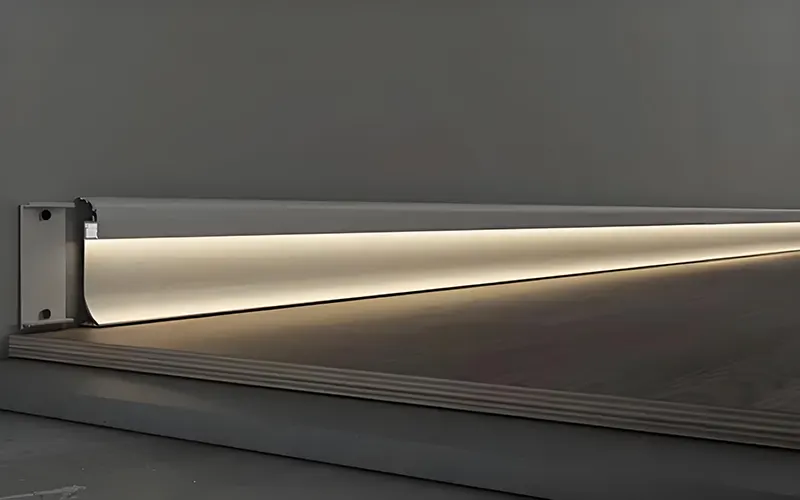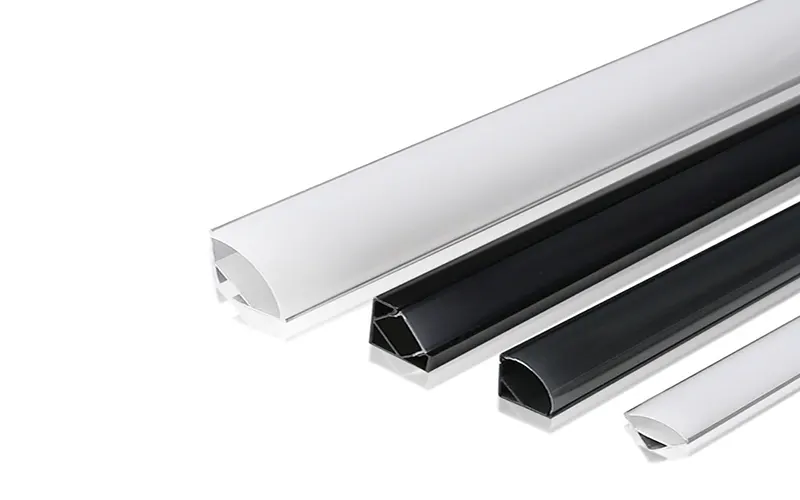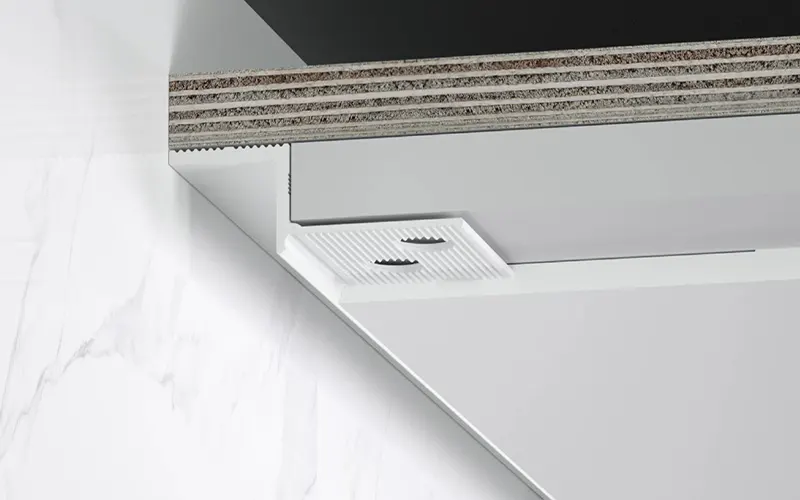
Miniature and ultra-slim LED profiles offer the perfect solution for illuminating overlooked corners. A wide range of these micro LED channel now enables designers to ingeniously conceal light sources within extremely narrow gaps. Today, let’s take a closer look at micro LED channel. More details, pls read LED Aluminum Channel Complete Guide 2024
What Is a Micro LED Channel?
A Micro LED channel is a type of ultra-slim, low-profile aluminum extrusion designed to house LED strips while occupying minimal space.
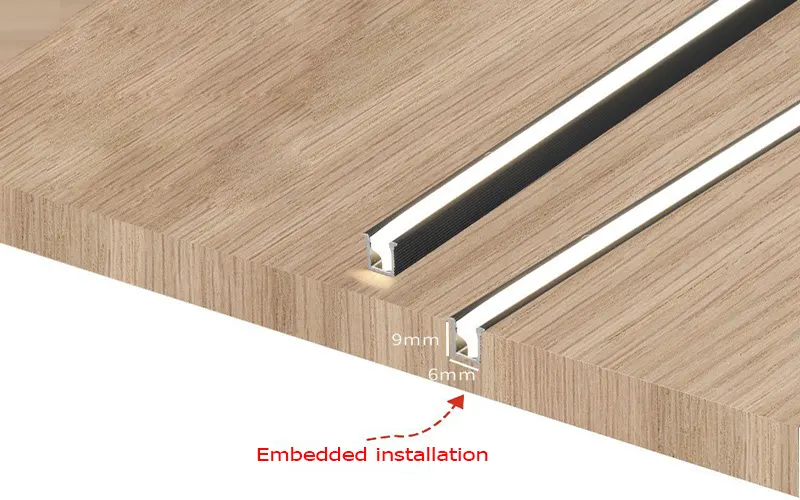
Engineered for discreet installation within cabinetry, furniture, shelving, and architectural millwork, these channels avoid the bulky, obtrusive appearance often associated with standard LED profiles.
The term “Micro” refers to both the external dimensions of the aluminum housing and the internal channel width, which is designed to accommodate narrow LED strips (typically 4mm to 6mm wide). They consist of three core components:
- The Aluminum Extrusion: Typically made of high-quality 6063-T5 anodized aluminum, it doubles as a heat sink to dissipate heat from the LEDs. These profiles are generally compact in size.
- Diffuser/Lens: A polycarbonate (PC) cover that snaps into the channel to protect the LEDs and soften the light output.
- End Caps: Used to seal the profile and provide a clean, finished look at the edges.
Why Choose Micro Channels Over Standard LED Profiles?
Micro LED channels are designed for exceptionally tight spaces. Selecting the right profile requires balancing space constraints, heat dissipation, and visual aesthetics. Here is why micro channels are often the superior choice for modern projects:
Discreet Integration
Standard profiles can appear bulky and obtrusive when installed beneath thin shelves or inside fine furniture; in contrast, micro-profiles remain virtually invisible when the lights are off, preserving the aesthetic integrity of the overall design.
Minimal Material Removal
When embedding fixtures into wood or drywall, micro-profiles require only a shallow recess, effectively preserving the structural integrity of the cabinetry or wall.
Precision Lighting
When displaying jewellery or artwork, bulky profiles can be visually intrusive and distract the viewer from the exhibits; miniature channels provide the necessary illumination while staying unobtrusive, keeping the exhibits the focal point.
Heat Dissipation in Confined Spaces
Despite their compact size, miniature profiles dissipate heat better than mounting LED strips “bare.” This effectiveness prevents adhesive failure and avoids premature burnout of the LED chips.
Common Applications of Micro LED Channel
Thanks to their versatility, Micro LED channels are highly favoured in specific applications—particularly in tight spaces where they can be discreetly concealed along the edges of shelves.
Cabinetry and Joinery
Ideal for under-cabinet and in-cabinet lighting. Their slim profile allows them to be discreetly concealed within the narrow spaces along shelf edges.
Functional Wardrobe Lighting
Provides illumination for wardrobes where space is at a premium and every inch of storage matters, while also making it easier for users to locate their clothing.
Staircase and Skirting Lighting
Ultra-slim profiles can be recessed beneath stair treads or installed along skirting boards, providing safe, low-level, and guiding illumination.
Retail and Jewelry Display
These light channels are ideal for illuminating high-value merchandise; in such settings, the light source must be concealed from the customer’s view to prevent glare.
Architectural decorative details
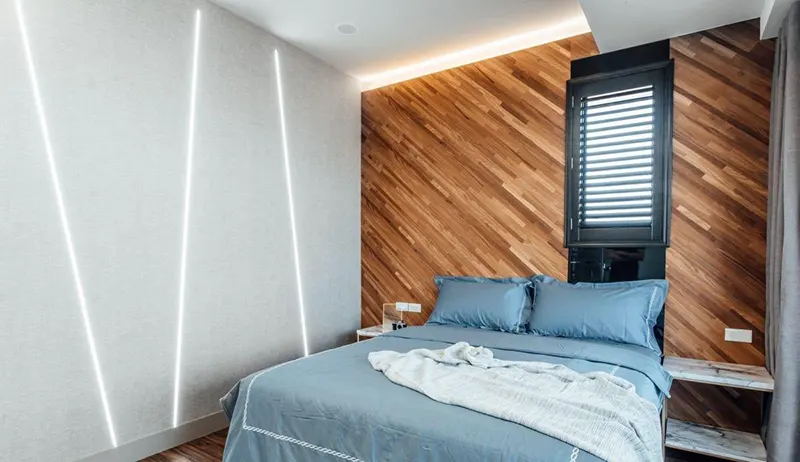
Creating “lines of light” effects on wall panels or ceilings; for these applications, standard-sized profiles often appear too bulky and lack refinement.
How Do You Choose the Most Suitable Micro LED channel for Your Project?
When selecting the right micro profile, the first factor to consider is undoubtedly its dimensions. Due to limited internal space, you must ensure that your chosen LED strip fits within the profile housing.
1. Match the LED Strip Width
Be sure to verify the internal width of the profile before purchasing. Most micro-profiles accommodate 5mm or 8mm wide LED strips; standard 10mm strips generally do not fit into true micro-profiles.
2. Select the specific model based on requirements
Different projects call for different profiles. The following four industry-standard models cater to a variety of installation needs:
ES-0809: An ultra-compact surface-mounted model, perfect for minimalist furniture accents.
ES-0814: A slightly deeper profile that offers better diffusion for a softer light effect.
ES-0912: Often used for recessed applications where a slim flange is needed to cover the edges of a routed groove.
ES-0812: A versatile all-rounder that balances slimness with enough internal space for standard narrow strips.
Conclusion
A micro LED channel is far more than a smaller aluminum track—it is an optical tool that transforms pixelated, vulnerable LED strips into professional, seamless, and durable lighting installations. We recommend the popular mini LED aluminum profiles ES-0809, ES-0814, ES-0912 and ES-0812.
Browse our complete collection of Micro LED channels. Not sure which model fits your LED strip? Download our free Micro Channel catalog or contact our team for a personalised recommendation.
FAQs
Most micro LED channels are designed for narrow LED strips, typically 3 mm to 8mm wide. Models like ES-0809, ES-0814, ES-0912, and ES-0812 are ideal for slim COB or SMD LED strips. Always check the inner width of the channel before selecting your strip.
Generally, no. Mini profiles are best suited for low- to medium-power LED strips, as their compact size limits heat dissipation.
Yes. When used with a frosted or opal diffuser, miniature LED channels help soften the light output and reduce glare.