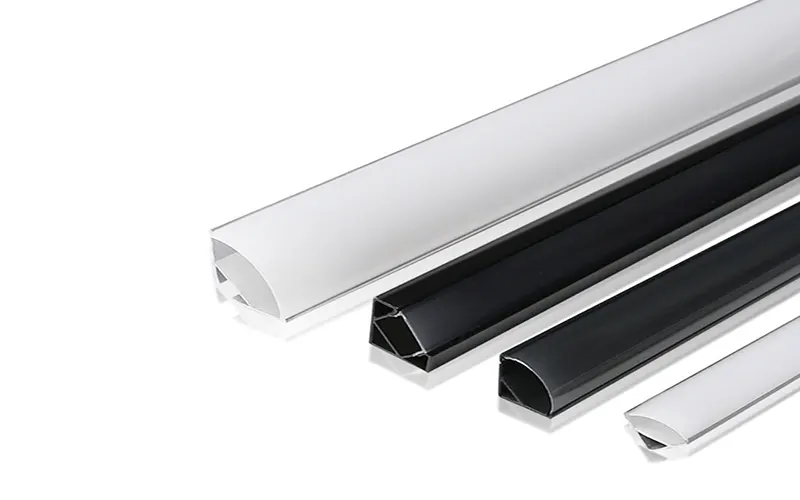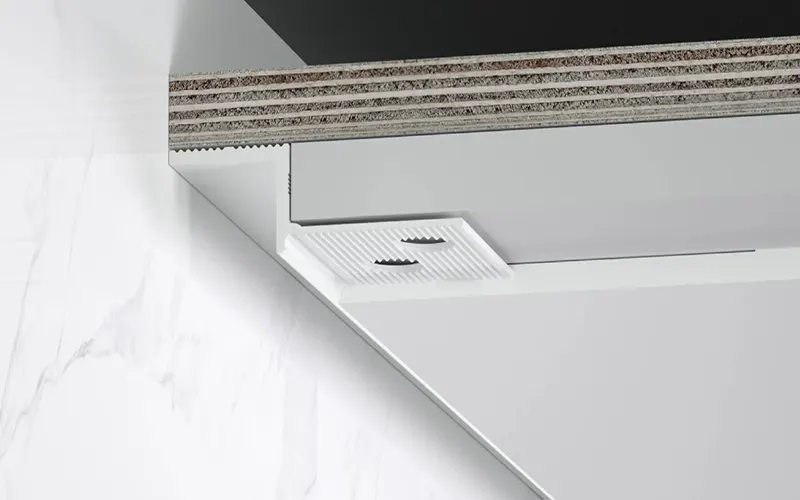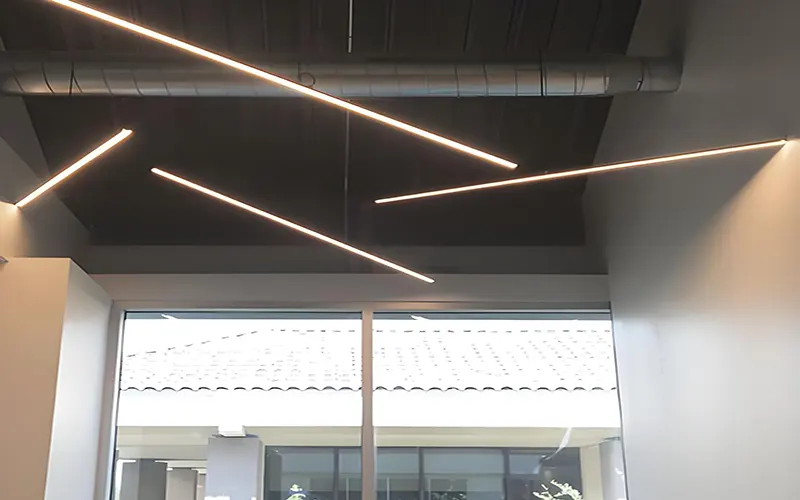
Kickboard LED Profile are a type of LED profile. They consist of a flat aluminum alloy channel designed specifically for housing LED strips at floor level, typically installed where standard baseboards would go or serving as a direct replacement for them.
Unlike conventional LED profiles mounted on ceilings or walls, skirting profiles are impact-resistant and have a low profile (usually 2 to 4 inches in height); they often feature an angled design to project light upwards or horizontally.
Kickboard LED profile transform ordinary baseboards into lighting fixtures that offer both functionality and decorative appeal, while also enhancing safety, creating ambiance, and adding architectural beauty.
What Is a Kickboard LED Profile?
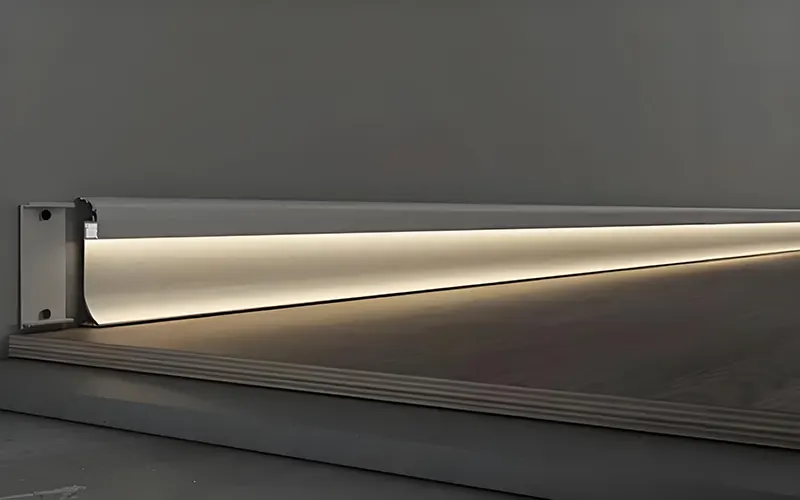
Kickboard LED profile is a specialized aluminum housing designed primarily for installation at the base of cabinets or kitchen islands, or along the bottom edge of a wall (the plinth area).
Its function is to securely hold LED strips while lending a professional, refined appearance to the installation area.
Heat Dissipation
LED strips generate heat during operation. The aluminum structure acts as a heat sink, effectively dissipating heat and thereby significantly extending the lifespan of the LEDs.
Light Diffusion
Most profiles come with covers made of PC (polycarbonate) or PMMA (acrylic). These “diffuser covers” soften the light, eliminating the harsh “hotspot” effect caused by individual LED chips and creating a uniform, continuous lighting effect.
Protecting LED Strips
In high-traffic areas like kitchens, the baseboard area is susceptible to impacts from vacuum cleaners, mops, or feet. LED profiles protect delicate electronic components from physical damage and moisture ingress.
Types of Kickboard LED Profiles: Recessed vs. Surface-Mounted
There are two main installation methods for LED skirting profiles: recessed and surface-mounted. Generally, the choice depends on the construction stage, the type of wall, and the visual effect you wish to achieve.
Recessed Installation (Flush with the Wall)
Recessed profiles are installed into pre-cut channels in walls or skirting boards, ensuring the profile surface sits flush with the surrounding area.
Popular Kickboard LED Profile recessed models:
ES-3411 – 34mm narrow profile; ideal for tight spaces or as an accent lighting feature.
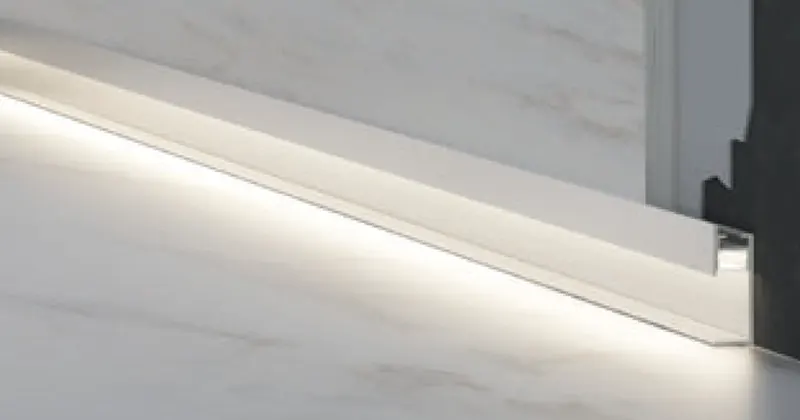
ES-7212 – 72mm wide profile; perfect for taller baseboards or creating a high-impact lighting effect.
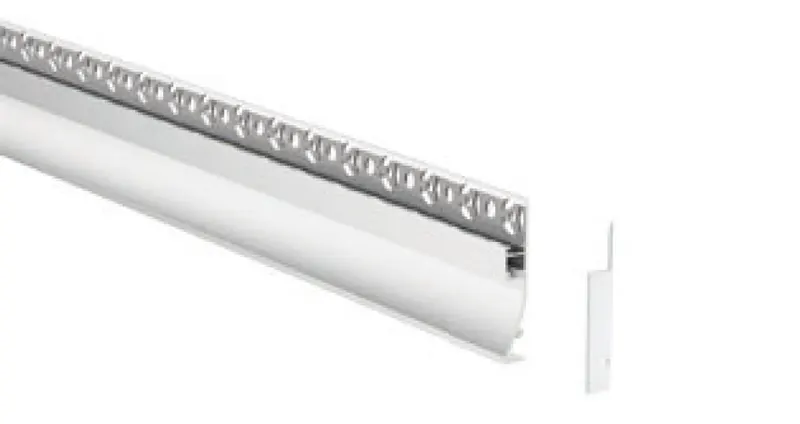
ES-5813 – 58mm medium profile; features a deeper LED housing to accommodate higher-brightness strips and provide superior heat dissipation.
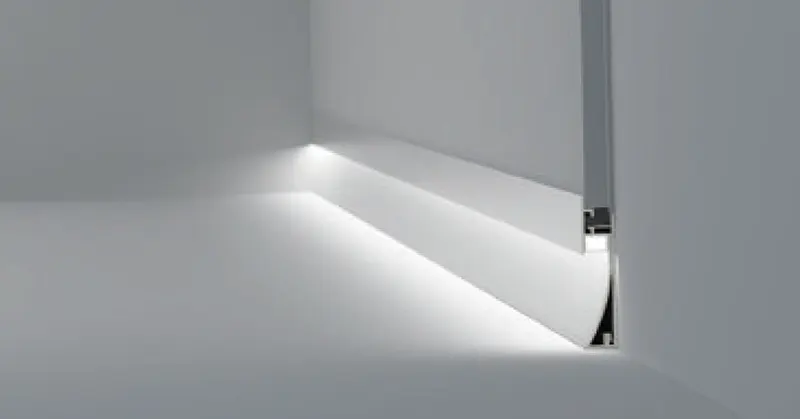
Kickboard LED Profile Surface-Mounted
These surface-mounted profiles require no cutting; instead, they can be installed simply by screwing or adhering them directly onto existing walls or skirting boards. More details, pls are read Why Designers Prefer a Surface-Mounted LED Profile?
In addition, their protruding design does not compromise the existing structure, making them an ideal choice for renovations or upgrades.
Surface-mounted Kickboard LED profile models:
ES-6513 – 65mm height, sleek rectangular shape, very popular for living rooms and hallways.
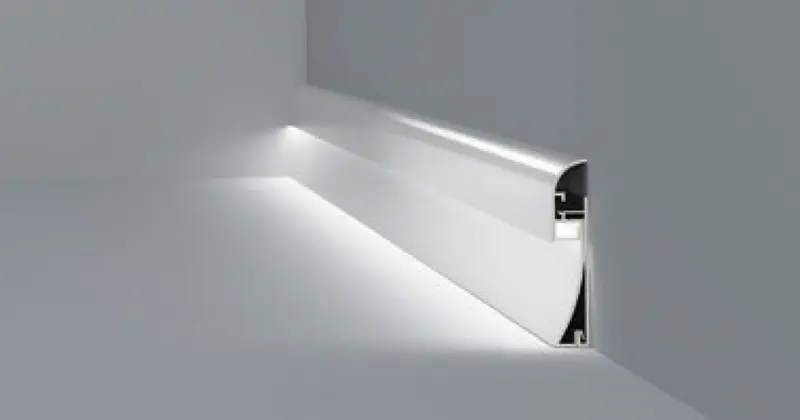
ES-8015 – 80mm profile with a gentle slope, excellent for commercial settings like cinemas or hotel corridors.
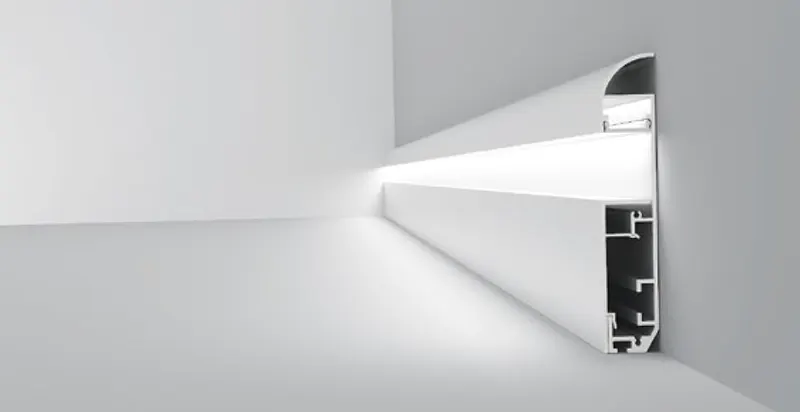
ES-9013 – 90mm tall, designed for high-impact areas where extra protection is needed.
How to Mount a Kickboard LED Profile?
Installing Kickboard LED profile for plinths requires precision to achieve a professional “floating” visual effect. Follow these basic steps:
Measuring and Cutting
Measure the total length of the cabinet base. Cut the profile to the required size using a miter saw equipped with a blade suitable for aluminum; alternatively, you can order custom lengths at the time of purchase.
Wiring Preparation
Drill a hole at the end of the skirting board to route the wires for connection to the LED driver (transformer). Ensure the driver is placed in a well-ventilated area, such as under the sink or behind a cabinet.
Securing the Profile
For surface mounting, use countersunk screws or high-strength adhesive backing to attach the profile to the baseboard.
For recessed mounting, ensure the groove width is slightly larger than the profile or provides a snug fit, then press the profile into the groove.
Installing the LED Strip
Clean the interior of the aluminum channel with alcohol to remove dust. Peel off the protective backing from the LED strip and press it firmly into the channel.
Snap on the diffuser cover
After testing and confirming that the LED strip is functioning correctly, snap the plastic diffuser cover onto the profile. This protects the LED chips and enhances the overall appearance.
Key Considerations When Purchasing Kickboard LED Profile
- Aluminum Quality: Opt for 6063-T5 anodized aluminum. Anodizing prevents oxidation, ensuring the profile does not develop an “aged” or “weathered” appearance over time.
- Internal Width: Ensure the width of the profile’s internal channel is sufficient to accommodate your chosen LED strip.
- Diffuser Material: Choose a UV-resistant polycarbonate (PC) diffuser. Cheap plastic diffusers tend to yellow when exposed to heat and light, which can alter the color temperature of the lighting.
- End Caps and Clips: Ensure the supplier provides matching end caps. These components prevent light leakage at the ends of the profile and keep dust from entering the interior.
Conclusion
The Kickboard LED Profile is a small detail that makes a massive difference in modern architecture. By choosing the right model—whether a recessed ES-3411 for a seamless look or a surface-mounted ES-9013 for ease of installation—you can transform any room into a professionally designed space.
Browse our full range of LED aluminum profiles and find the perfect match for your design. Contact us today for technical specifications or bulk pricing for your next commercial or residential build!
FAQs
For typical cabinetry, the installation height usually ranges from 50mm to 100mm above the floor. The goal is to position the light source low down to create a soft, glowing effect.
Yes. However, you should choose surface-mount models; kickboard LED profiles are ideal for retrofitting existing cabinets because they do not require routing or cutting grooves.
While not mandatory, using a diffuser cover is highly recommended. It softens the light, reduces glare, and creates an even lighting effect.
The LED strips installed within the skirting profiles are powered by low-voltage LED drivers (power supplies), typically 12V or 24V. These drivers are usually concealed inside cabinets or in a hidden space nearby.