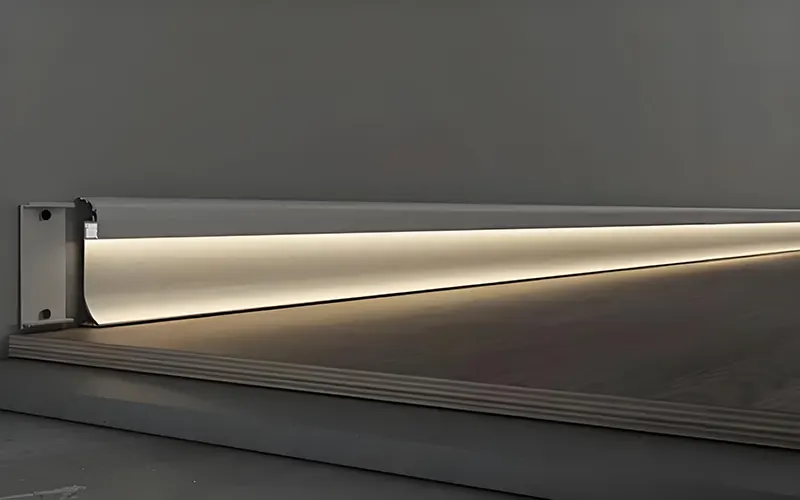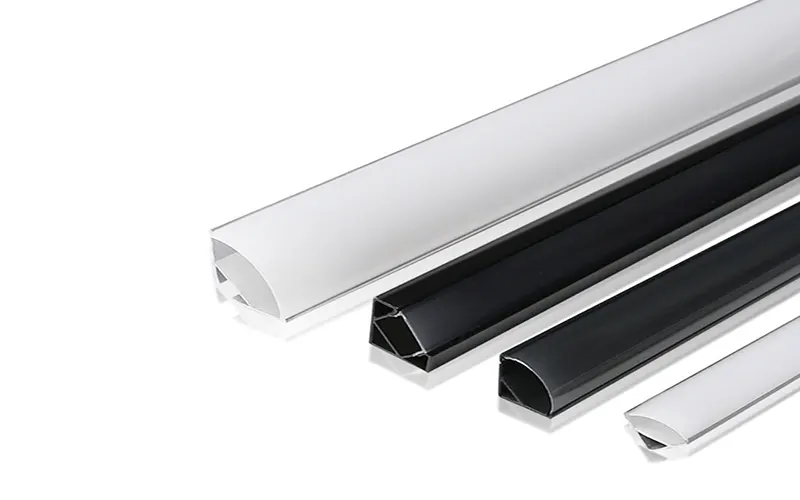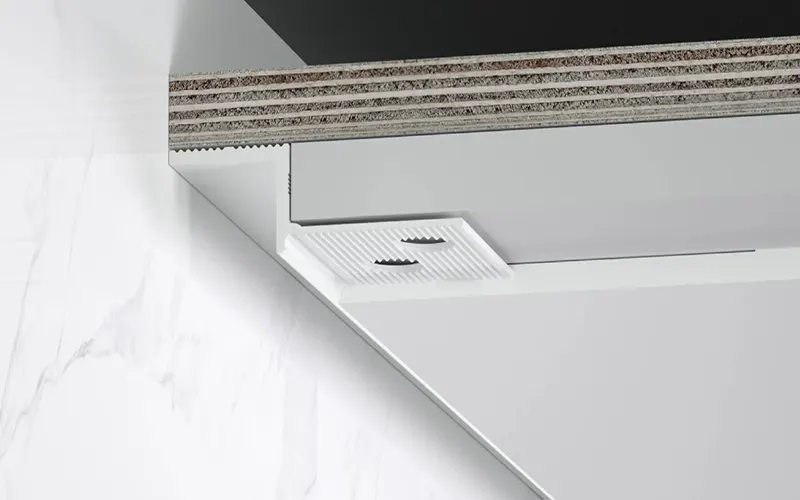
In the realm of lighting design, linear LED profiles have emerged as a pivotal element in defining the soul of a space, distinguished by their clean lines and their capacity to guide the eye. However, in response to the exacting demands of designers, architects, and project managers, surface-mounted LED profile have gained significant traction, becoming a highly sought-after lighting tool. What accounts for their widespread favor among designers? This article delves deep into the mechanics and attributes of surface-mounted LED profile, offering practical, actionable solutions for their application.
What are Surface-mount LED Profile?
Surface-mounted LED profile are actually a type of LED profile, just with a different installation method. Before delving into its advantages, we first need to clarify a basic concept: what are surface mount LED profiles? More details, pls read How Many Types of LED Channels Are There?
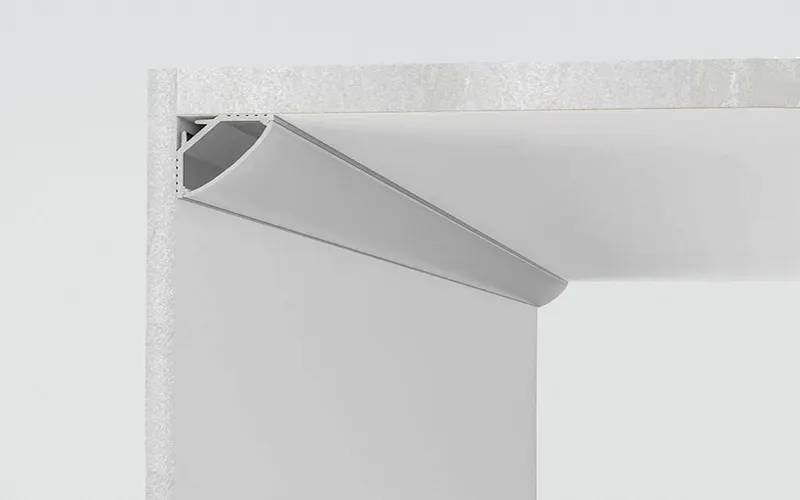
Simply put, it’s a linear metal channel (usually called an LED profile) specifically designed for LED light strips. It consists of an aluminum housing + LED light strip + diffuser.
- Aluminum Profile: The appearance is generally silver, currently available in custom white and black, which you can choose according to your needs.
- LED Diffuser: Common diffusers include transparent, frosted, and milky white.
It’s installed by directly fixing it to the “surface” of a completed substrate such as a ceiling, wall, or cabinet. This contrasts sharply with “embedded” profiles that require grooves and pre-embedding in the substrate.
You can think of it as a “plug-and-play” upgrade solution for linear lighting—it requires no complex structural modifications; simply fix the profile, embed the light strip, and cover it with an optical diffuser to achieve a pure, uniform linear light and shadow effect.
Why Do Designers Prefer Surface-Mounted LED Profile?
For designers who prioritize aesthetic appeal while simultaneously balancing efficiency and functionality, surface-mounted profiles offer a multitude of decisive advantages.
Flexible Installation
Surface-mounted LED profile require no major modifications to the building structure. Installation is easy on solid concrete ceilings, glass, metal, or existing wood structures.
This flexibility means designers can create linear lighting effects on any surface, making it particularly suitable for existing building renovation projects or special ceiling structures where grooving is not feasible.
Reduced Structural Damage
In high-end commercial spaces, such as historic buildings, leased properties, or fully furnished projects, structural damage often poses a significant risk in terms of time and cost.
Surface-mount profiles minimize intervention in walls or ceilings, avoiding complex plastering, repairs, and repainting work, ensuring a clean construction site and the safety of the original structure.
Quick Replacement and Maintenance
Lifecycle maintenance is crucial for commercial lighting. Surface mounting systems offer exceptional maintainability.
When light strips or drivers require inspection or replacement, installers can simply remove the profile cover without damaging the ceiling or wall structure, significantly reducing maintenance time and long-term operating and maintenance (O&M) costs.
Diverse Sizes and Accessory Options
Modern LED Profile Systems offers a comprehensive product line with a wide variety of types to choose from. From ultra-thin to thick, from narrow bezels to wide faces, sizes are diverse.
More importantly, the manufacturer provides professional L-shaped, T-shaped, and cross-shaped connectors, angle connectors, and various end caps, enabling designers to easily achieve seamless, continuous, and even complex geometric lighting shapes to meet customized design needs.
Common Disadvantages and Solutions of Surface Mount Profiles
Despite the significant advantages of surface mount profiles, designers still encounter some challenges in practical applications. Choosing professional profile products and correct installation methods can perfectly solve these problems.
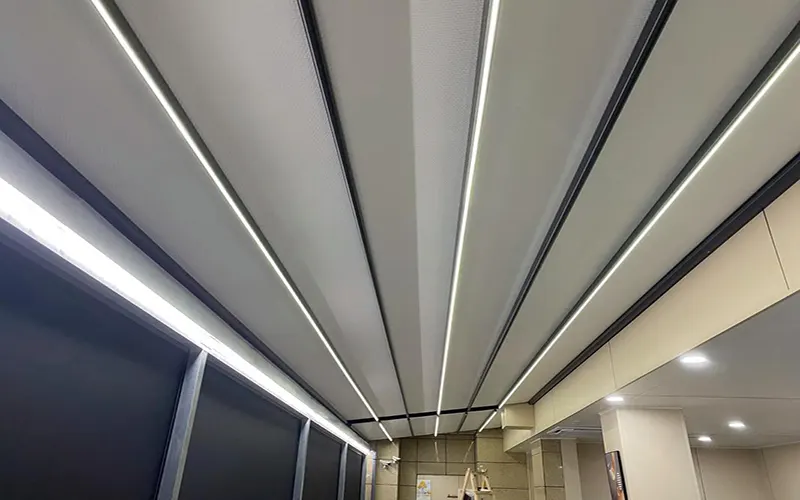
Excessive Hotspotting
Disadvantage: When the spacing between LED beads is large or the profile depth is insufficient, the light is uneven, resulting in noticeable hotspotting.
Solution: Use high-density LED strips (e.g., 240 LEDs/meter or higher), preferably COBLED strips. Also, prioritize deeper profiles and use frosted or milky white high-transmittance diffusers to maximize light mixing and achieve a linear, dot-free effect.
Unsightly Corners and Joints
Disadvantages: Gaps or inaccurate angles often appear at 90-degree corners or profile joints, affecting the overall aesthetics.
Solution: Use high-precision prefabricated connectors and cutting services. Professional suppliers provide precisely matched connection systems to ensure seamless joints at corners and extensions, achieving a customized, integrated visual effect.
Inconsistent Brightness in Multiple LED Strip Segments
Disadvantage: Due to voltage drop, the brightness of long LED strips is significantly lower at the ends than at the beginning.
Solution: Lighting designers should choose high-quality constant current drivers or systems with higher voltages (such as 24V/48V), and use dual-ended power supply (or intermediate power supply) when necessary.
Additionally, consult suppliers regarding the minimum wire specifications required for different strip lengths to address the uneven brightness issue at its source.
Conclusion
Surface-mounted LED profile have flexible installation, convenient maintenance, non-destructive mounting, and high adaptability. They have become the mainstream choice for designers and engineering projects. They deliver professional, uniform, and aesthetically pleasing lighting effects.
Contact us today to receive a free selection guide for surface-mounted LED profiles, along with expert technical support! We look forward to becoming your most trusted partner.
FAQs
Generally, we recommend using custom sizes. Of course, you can also choose to use dedicated corner connectors, which will incur an additional charge.
Firstly, the color of the profile exterior can be customized, as can the cover color. Secondly, the length of the LED profile can also be customized.
The biggest advantage of surface-mount LED profiles is that they do not require damage to the existing structure, grooving, or cutting of the substrate, resulting in faster installation and lower costs. Furthermore, maintenance is easier, making them suitable for commercial spaces requiring regular lighting inspections.
No. Modern surface-mount profiles feature simple, narrow-frame, and clean lines that blend seamlessly with ceilings, walls, and furniture. They are very compatible with contemporary minimalist style.
Yes. Many wide-body, high-heat-dissipation surface mount profiles can be paired with high-power LED strips for main light source needs in office workstations, factory aisles, large shopping malls, etc.