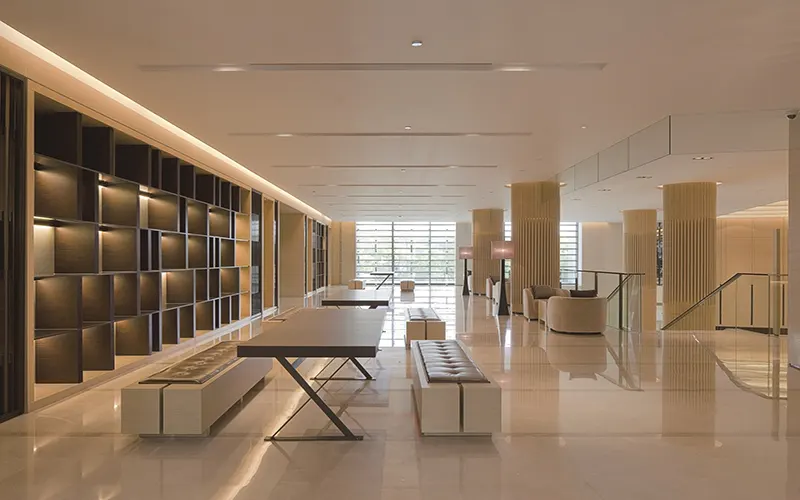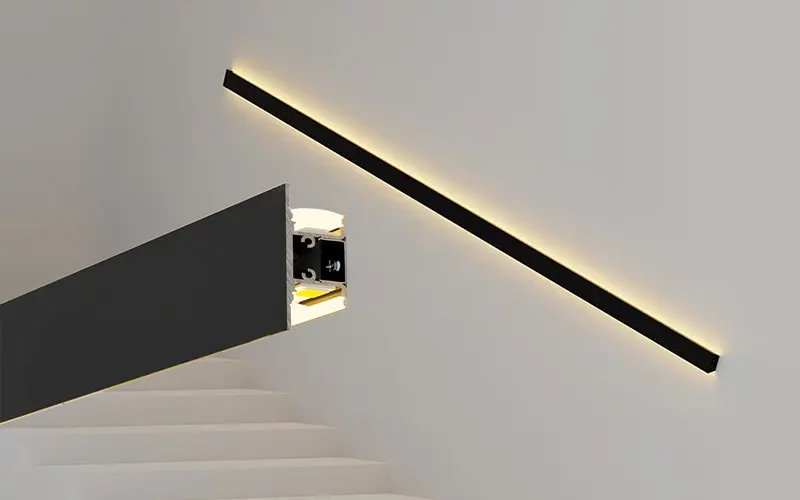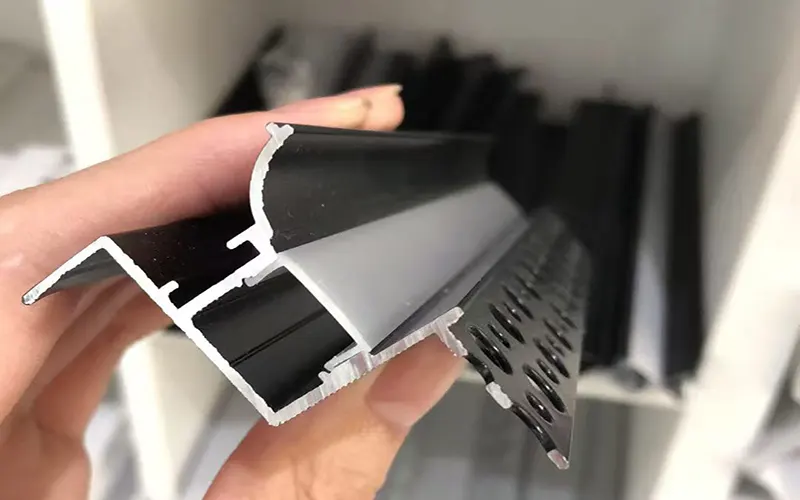
LED aluminum profiles are typically equipped with various types of diffusers, such as transparent, milky white, frosted (diffusing), and black. Among these, clear LED diffuser cover offer the highest light transmittance and are widely used in applications requiring high brightness.
So, why do clear LED diffuser cover provide the highest brightness? Are they suitable for all projects? This article will provide a comprehensive analysis from both engineering and application perspectives.
What is a Clear LED Diffuser Cover?
A Clear LED Diffuser Cover refers to a high-transparency LED diffuser cover. It is typically made of PC (polycarbonate) or PMMA (acrylic) material. It is used to mount LED aluminum profiles, providing physical protection (dustproof, moisture-proof, and impact-proof) for LED strips or modules.
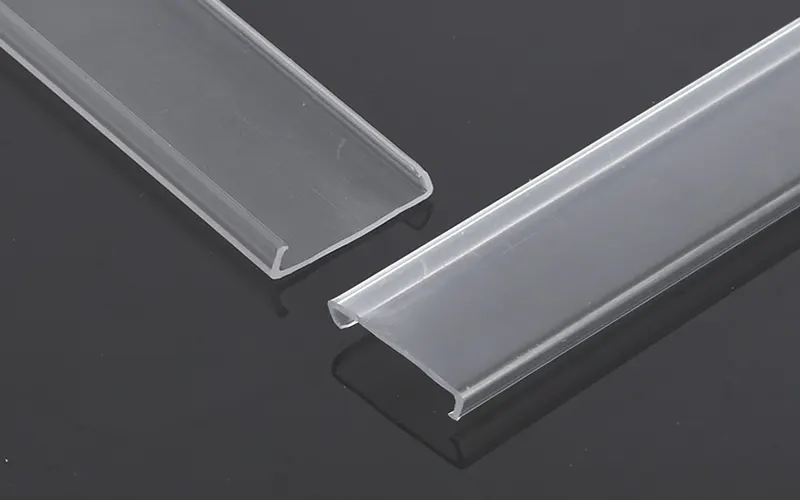
This type of cover usually has extremely high clarity, making it a good choice if you require high brightness. High-quality transparent diffusers typically have a light transmittance of 92% to 95% or higher, almost negligiblely obstructing light flow.
Frosted vs. Clear Diffuser: Brightness Comparison Analysis
When choosing LED diffusers, we often compare frosted and clear covers. Let’s look at a detailed comparison below.
| Features | Clear Diffuser | Frosted Diffuser |
| Light transmittance | 90% – 98% | 50% – 75% |
| Brightness loss | Extremely low(<10%) | High(25% – 50%) |
| Lighting effects | Strong graininess, clear point light source | Even and soft, without glare |
| Irradiation distance | Far (focused beam) | Near (light dispersion) |
If your lighting objective is high spatial illuminance (such as high warehouse lighting or long-distance projection), the clear LED diffuser cover is the undisputed choice.
Where is the Best Place to Install a Clear LED Diffuser?
Transparent LED diffusers are commonly used in applications with extremely high lighting requirements, which is key. These applications typically don’t need to cover the point light source of the LEDs, but rather maximize light penetration. For example: More details, pls read When to Use a Transparent LED Cover?
- High-bay warehouse lighting: Light needs to penetrate a height of over 10 meters to reach the ground.
- Plant grow lights: Photosynthesis requires maximizing the preservation of the spectrum.
- Refrigerated display cases: Transparent diffusers allow products to appear more vibrant and eye-catching under strong light.
Will a LED Clear Cover Affect Visual Comfort?
This is a common concern for many users and project purchasers when choosing a Clear LED Diffuser Cover.
Because a transparent diffuser can transmit over 90% of the light, and its ability to diffuse light secondary is relatively limited, the light emitted by the LED beads can more easily penetrate the diffuser and be output directly. Therefore, in some application environments, the following may occur:
The risk of glare is relatively higher, especially at lower installation heights or when the viewing angle is close to the light source.
The point-like effect of LEDs is more pronounced, particularly when the spacing between the LED beads is large or the LED strip density is low.
Common optimization methods in practical engineering include:
- Use high-density LED strips to reduce spacing between LED beads and minimise point-like glare at the source.
- Combined with a deeper LED aluminium profile, the light mixing distance increases, resulting in more uniform light distribution within the profile.
- Properly controlled installation height and viewing angle prevent direct light from shining into the eyes, improving overall visual comfort.
When these factors are comprehensively considered and correctly implemented, Clear LED Diffuser systems can provide both brightness output and comfort requirements. This is one of the key reasons why transparent diffusers are widely used in many functional lighting projects.
When to Choose a Clear LED Diffuser Cover Project?
Before making a final decision, we recommend careful analysis and evaluation of the following three dimensions:
- Installation Height: For heights exceeding 4 meters, a clear cover is generally recommended to reduce light loss.
- Brightness Requirements: Does your project have specific lux (Lux) requirements?
- Aesthetic Preferences: Do your clients mind seeing a “starry sky” of LED point light sources?
If you prioritize performance and energy efficiency, then a Clear Cover is the best choice.
Conclusion
Clear LED Diffuser Covers, with their high light transmittance and low light loss, achieve maximum brightness output in numerous lighting projects, which is the core reason for their widespread application. While glare control requires specialized design, their energy-saving and brightness output advantages are unmatched by any frosted material.
As a professional LED profile supplier, we offer a variety of high-performance Clear LED Diffuser Covers, supporting customized lengths and UV-resistant material selection.
FAQs
Yes, provided you know the dimensions of your LED profile. Then purchase a clear diffuser of the same size and model.
Our optical-grade UV-resistant polycarbonate (PC) contains special stabilizers, maintaining extremely high transparency even after 5-10 years of outdoor use, ensuring long-term brightness without degradation.
Visually, yes. Due to the mirror-like effect of clear surfaces, any minor scratches will be more noticeable than on frosted surfaces.
Absolutely. We support extrusion molding and can design various geometries based on your aluminum profile. Currently, single strip lengths range from 1-3 meters, and custom lengths are supported.
Yes. Due to the limited diffusion capability of a transparent diffuser, spot light is more easily detected when the LED strip density is low. Solutions include increasing the LED density, increasing the profile depth, or adjusting the mounting angle.