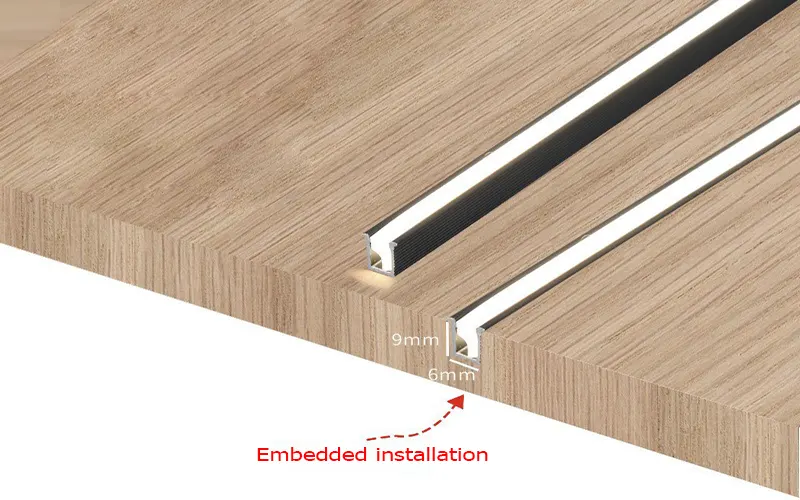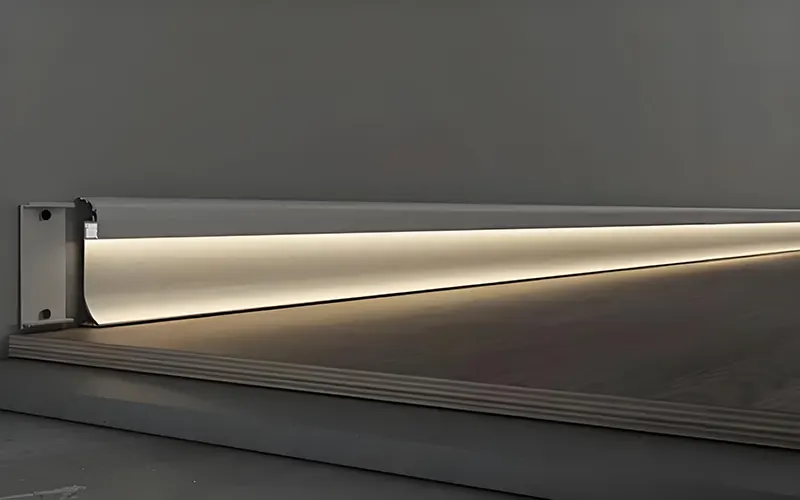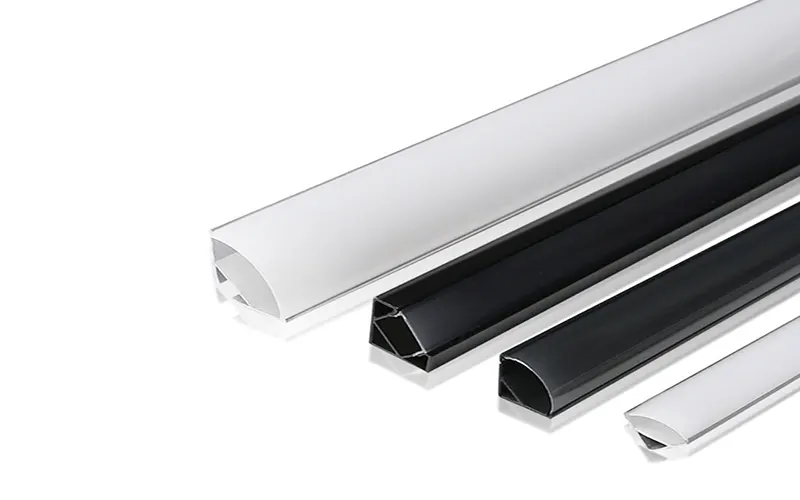
In the field of architectural lighting design, illuminated handrails are attracting increasing attention, as they strike a perfect balance between safety and aesthetics. Traditional handrails served a singular purpose preventing falls, but LED handrail profiles have revolutionized this landscape. By embedding linear LED strips into sleek aluminum profiles, architects and designers can transform staircases, balconies, ramps, and corridors into stunning visual features. Are you interested in learning more about LED handrail profiles?
What are the Benefits of Illuminated Handrail LED Profiles?
While avoiding visual clutter is important, the primary objectives are enhancing wayfinding and ensuring safe evacuation. However, a frequently overlooked aspect of architectural lighting is evacuation safety—specifically, guiding people safely through a space during both routine use and emergencies.
Traditional solutions often rely on ceiling-mounted exit signs or floor-level step lights; these can create visual clutter or leave unlit “blind spots.”
Intuitively Define Pathways
Illuminated handrails naturally guide the eye, clearly marking the direction of stairs, ramps, and corridors for a more intuitive experience.
Enhanced Staircase Visibility
Light projected downwards from the LED handrail profile illuminates each step, reducing the risk of tripping in low-light conditions, during emergency evacuations, or during outdoor use at night.
Reducing visual clutter caused by lighting fixtures
There is no need to install bulky wall washers or recessed ground lights, as the handrail itself serves as the light source. This significantly reduces costs.
Creative LED handrail profiles
LED handrail profiles offer scope for diverse creative designs, enabling “silent guidance.” They are intuitive and compliant with standards, while also creating a seamless visual aesthetic.
Can LED Handrail Profiles Be Used Outdoors?
A major advantage of LED handrail profiles is their ability to maintain design continuity as people move from a building’s interior to its exterior; they can be seamlessly integrated for both indoor and outdoor lighting.
Environmental Adaptability
LED handrail profiles allow for the selection of different IP (Ingress Protection) ratings based on the installation location while maintaining a consistent aesthetic. Waterproof profiles are essential for outdoor applications.
Indoor Solutions
For residential interiors, an IP20 rating is generally sufficient; however, areas such as commercial building lobbies may require an IP44 rating to ensure greater durability.
Outdoor Weather Resistance
For open-air areas or locations near water features, utilizing IP65 to IP68-rated equipment ensures the system effectively withstands dust and moisture.
Atmospheric Cohesion
Designers can employ a consistent color temperature (e.g., 2700K–3000K, creating a warm and inviting ambiance) across both indoor and outdoor areas, thereby unifying the sensory experience of the entire building.
How Do LED Handrail LED Profiles Enhance Aesthetic Appeal and Architectural Charm?
Beyond their functional utility, LED handrail profiles serve as powerful visual tools that allow architects to accentuate a building’s structural contours.
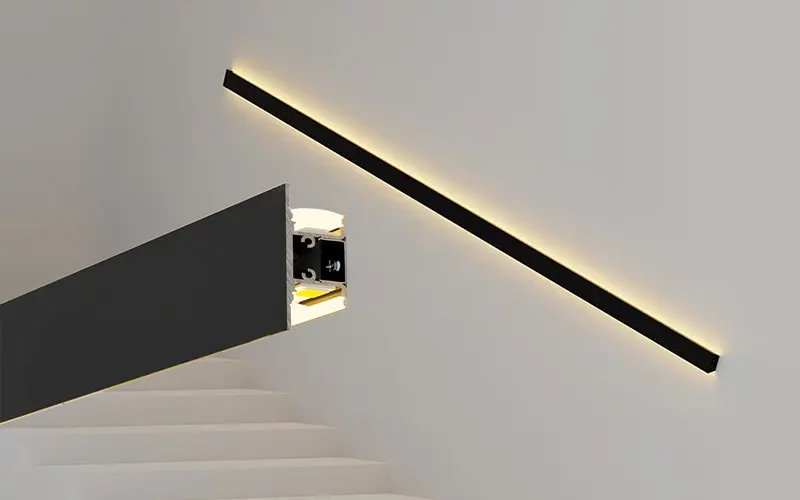
Defining Architectural Lines
These LED handrail profiles accentuate the geometric lines of the architectural structure, adding depth and dimension to minimalist designs. More details, pls read How are LED Aluminum Profiles Used for Architectural Lighting?
A Fusion of Materials
When LED strips are concealed within glass railing channels or embedded into marble stair handrails, the handrails appear to glow from within, yet the light source itself remains unseen. This effect creates the visual impression of a “floating” staircase, lending an air of luxury to villa interiors and hotel lobbies.
Dynamic Lighting Effects
The advanced lighting system supports RGB color adjustment, allowing color schemes to shift according to specific event requirements and synchronize with the building’s exterior lighting to create a unified brand image or atmospheric experience.
An Interpretation of Modern Minimalism
The LED handrail profile integrates seamlessly into drywall or metal framing, casting nothing but a pure line of light. Gone are bulky wall fixtures and distracting, cluttered shadows—leaving only the architectural lines themselves to reveal their pure beauty.
Can LED Handrail Profiles Be Used for Commercial Lighting?
Certainly. Commercial projects—such as office buildings, hotels, and retail spaces—constantly face two major challenges: operating costs and the disruptions caused by maintenance work. LED handrail profiles address these issues more effectively than traditional lighting solutions.
Energy Efficiency
Modern LED handrail systems consume only 4–14 watts per metre while delivering ample illumination. Compare that to:
- Recessed ceiling downlights: 10–15W per fixture (often 1 per meter)
- Wall sconces: 8–12W each (every 1.5–2m)
Conclusion: Compared to traditional lighting solutions, energy savings reach as high as 70%–80%. Taking a 50-meter-long commercial corridor as an example, this translates to annual savings of hundreds of dollars, while also reducing the load on HVAC systems (since LEDs generate far less heat than traditional lighting fixtures).
Maintenance and Servicing
The LED handrail profile boasts a lifespan exceeding 50,000 hours (equivalent to approximately 17 years based on 8 hours of daily use), requiring minimal maintenance. Even when maintenance is required, the process is straightforward:
- Removable end caps
- Driver access via a junction box
- Snap-fit diffuser for easy removal and cleaning
ESLEDPROFILE guidelines recommend cleaning the diffuser and profile quarterly; this requires only a simple wipe-down—a far easier task than the laborious process of removing a broken bulb from a recessed fixture.
For commercial high-rise buildings, integrating handrail lighting systems with Building Management Systems (BMS) and daylight sensing technology can further reduce energy consumption.
Additionally, occupancy sensing technology can be employed to dim the lights to 20% brightness at night, restoring them to full brightness only when someone approaches; this not only saves on energy costs but also reduces the burden of maintenance.
Technical Advantages of Aluminum LED Profiles for Handrails
The “secret” to a high-performance handrail system lies in the quality of the aluminum profile itself; thus, the quality of this raw material is paramount.
Thermal Management
The aluminum profile serves as a crucial heat sink. Especially in extreme climates, high-quality profiles combined with thermal paste effectively dissipate heat generated by the LEDs, thereby preventing premature failure caused by overheating.
Light Directionality
LED profiles are specifically designed to direct light precisely where it is needed. They can illuminate steps downwards or project light sideways, creating a soft, atmospheric glow on adjacent walls.
Light Quality
To prevent “hotspots” or visible LED dots, these high-quality profiles are designed to accommodate high-density LED strips (120–240 LEDs per meter) and feature specialized diffusers, creating a smooth, continuous beam of light.
Ease of Installation
The profiles provide a straight, rigid mounting channel for the LED strips, preventing the unevenness or waviness that can occur during long-run installations. They can be surface-mounted, recessed into handrails, or even integrated directly into glass mounting channels.
Recommend Suitable LED Profiles for Handrails
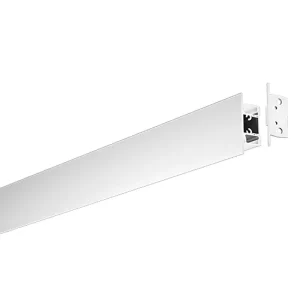
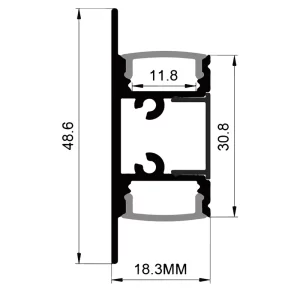
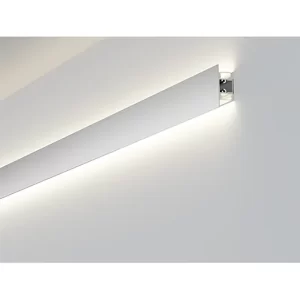
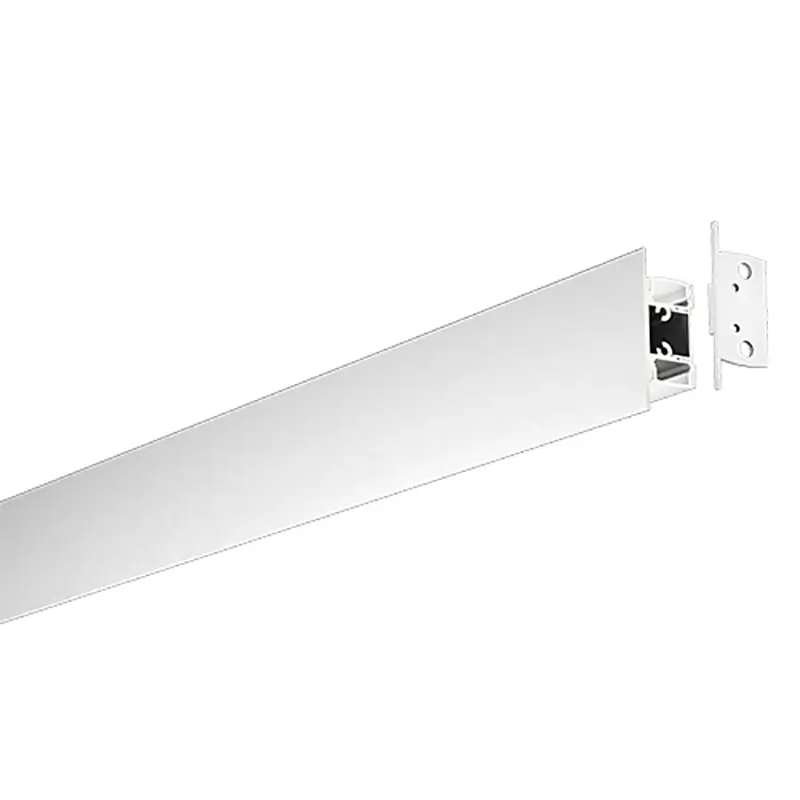
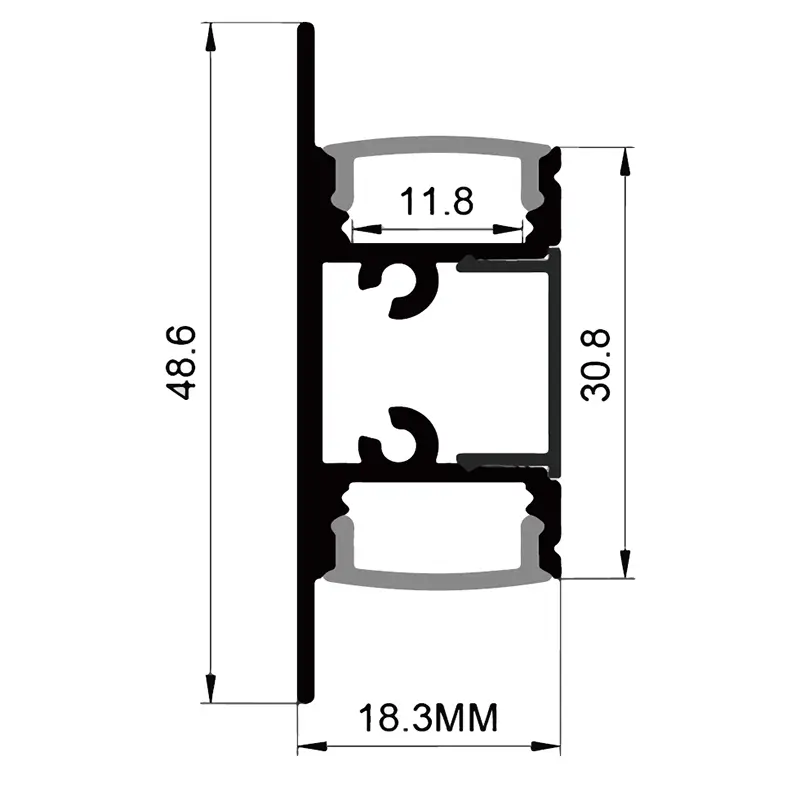

ES-1848
| Material | Alu 6063-T5 |
| Surface treatment | Anodized/Painted |
| Diffuser material | PC |
| Apply To | Indoor application |
| MOQ | 100Meter/Item |
| Warranty | 3 years |
| Certification | CE,RoHS |
Product Features
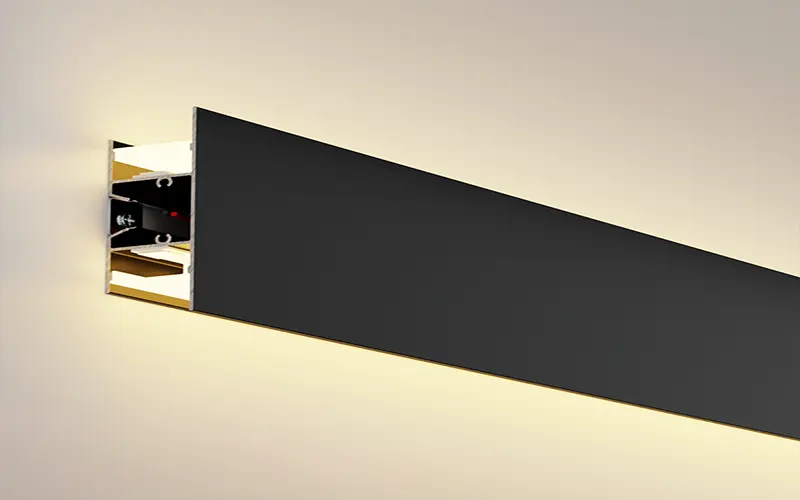
Wall led tape light channel type 1848; the size is 18.3*48.6mm. This LED aluminum profile is a wall surface-mounted profile with a unique design. It has two places led strip lights where lighting sources can be installed, which can illuminate upwards and downwards. The inner size is 11.8mm, so only can hold 8-10mm width LED strip lights.
Conclusion
LED handrail profiles represent the perfect fusion of safety, aesthetics, and energy efficiency in modern architectural lighting design. Whether you are an architect, lighting designer, or real estate developer, please consult the ESLEDPROFILE technical team when selecting high-quality LED handrail profiles to receive professional project advice, custom profile lengths, and detailed product specifications.
FAQs
Yes, provided the design and installation are sound. LED handrail lighting is designed to provide focused, low-intensity illumination that clearly defines walkways, edges, and steps, significantly enhancing safety without causing glare.
Yes, they are replaceable. High-quality LED handrail profiles are designed for easy maintenance and replacement of LED strips and drivers without the need to dismantle the entire structure.
Yes. LED technology offers high brightness while consuming far less energy than traditional lighting. This makes LED handrail profiles a cost-effective and sustainable long-term solution.
Yes. LED technology consumes significantly less energy than traditional lighting while delivering high brightness. This makes handrail LED profiles a cost-effective and sustainable solution for long-term use.
Yes, but there are some limitations. If there is sufficient space and ventilation, easy-to-install LED strips can be mounted within the hollow cavity of the existing handrail.