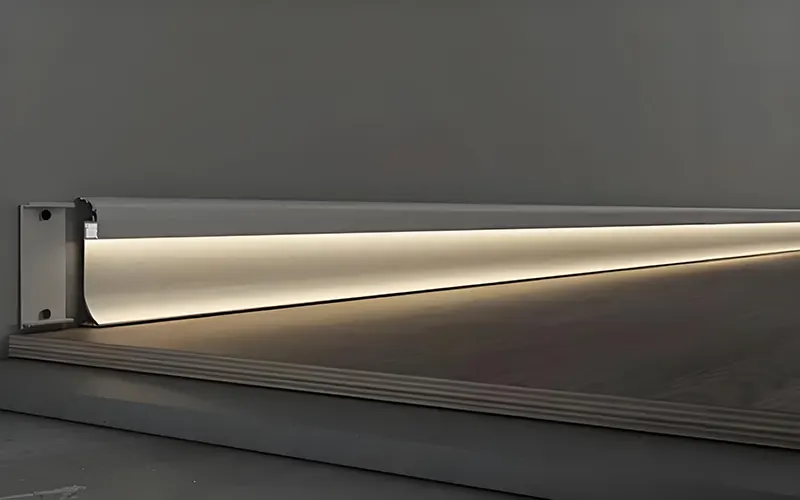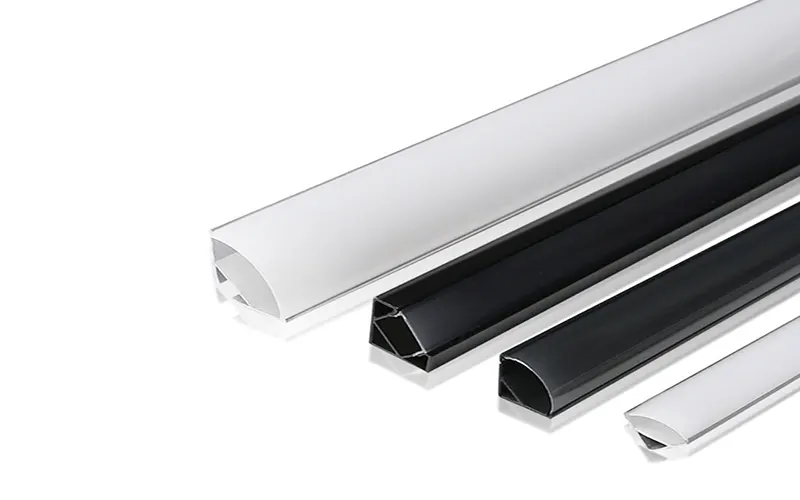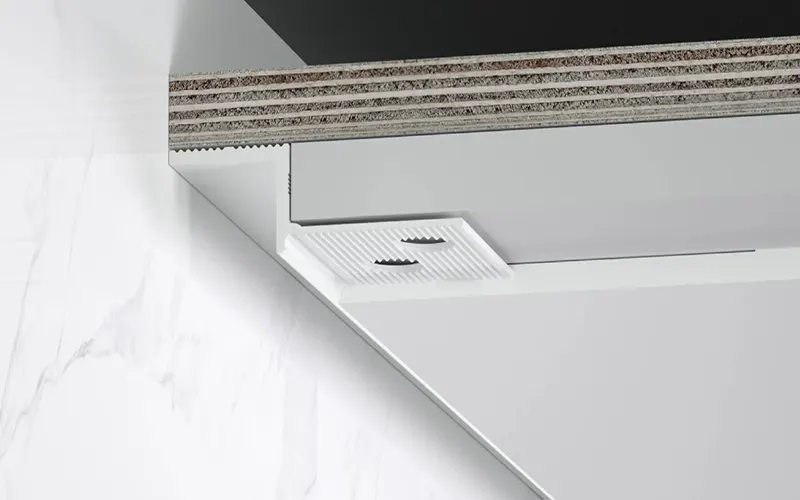
In commercial lighting projects, the quality of light often determines the quality of the space. Many people don’t understand wide-beam LED diffuser and have a misconception about them. Sometimes, however, we do need wide-beam LED diffuser; they are an irreplaceable tool in specific scenarios. They are not merely components that change the beam angle. But rather strategic choices for shaping the mood of a space and solving specific architectural challenges. More details, pls read How to Choose an LED Light Diffuser Strips?
When to Choose a Wide-Beam LED Diffuser?
Wide-beam LED diffusers should be your first choice when your lighting project exhibits one or more of the following characteristics:
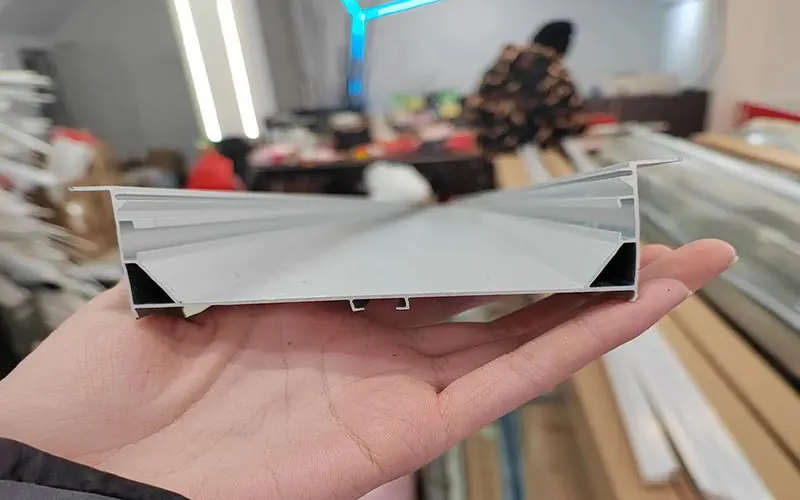
Core objective is ambient lighting
When the primary task of a project is to provide uniform, glare-free ambient lighting for a large area. Such as an open-plan office, school classroom, large conference room, or corridor.
Limited Ceiling Height
In low-ceilinged spaces, narrow beams can create uncomfortable bright spots and severe glare. Wide beams naturally diffuse the light, creating a softer visual environment.
Minimizing Shadows
In areas such as retail wall cabinet lighting, around makeup mirrors, or workbenches requiring fine work. Wide beams provide fill light from multiple angles, effectively softening and eliminating distracting shadows.
Seeking a sense of spaciousness
In small or compact spaces, wide beams of light can visually “push open” the walls by illuminating larger areas of the walls and ceiling, creating a more open and airy feel.
Overcoming the Limitations of Low Ceiling Heights
Low ceilings are a common architectural challenge in commercial spaces. And wide-beam LED diffuser are a powerful tool for solving this problem.
Problem Analysis: In offices, basements, corridors, or hotel rooms with ceiling heights below 3 meters, using narrow-beam angle luminaires (e.g., <30°) presents two main problems: First, multiple obvious and harsh halos are formed on the floor, disrupting the overall aesthetic.
Second, people standing or walking are easily subjected to direct glare because the light is concentrated downwards at an almost vertical angle.
Wide-beam LED diffusers diffuse the light to a wide angle of 120° or even 140°. Making the light-emitting surface appear larger and softer. The light reaches the work surface at a gentler angle, achieving a shift from “concentrated bombardment” to “uniform coverage.”
This not only eliminates uncomfortable light spots and glare but also achieves the same illuminance uniformity with fewer luminaires. Thus finding a perfect balance between cost reduction and increased comfort.
What are the Advantages of Wide-beam Diffuser?
Besides solving specific spatial challenges, wide-beam diffuser offer a range of core advantages that add value to end projects:
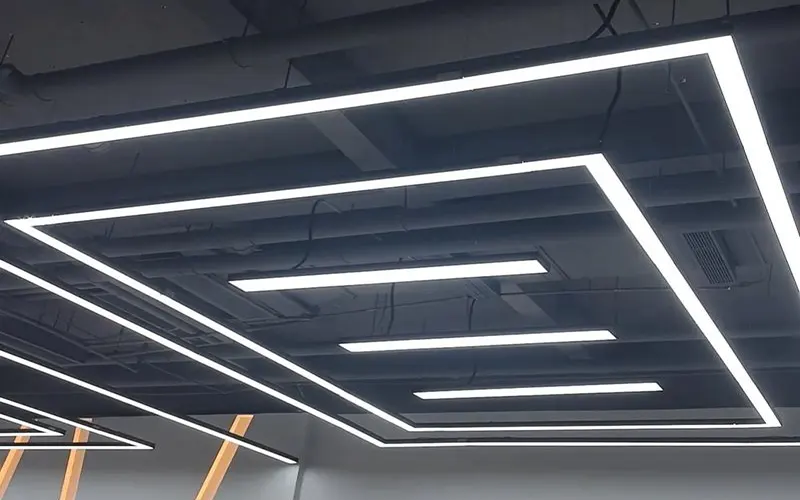
- Uniform and Soft Light: This is its core advantage. It seamlessly blends the light from multiple luminaires, avoiding harsh transitions between light and shadow. Creating a continuous and consistent lighting environment, greatly improving visual comfort.
- Excellent Glare Control: By reducing the light intensity (brightness) per unit area and dispersing the light, it significantly reduces direct and uncomfortable glare. Making it especially suitable for office and study environments requiring prolonged concentration.
- Simplified Installation and Design: Due to the wider coverage of a single luminaire. Designers can reduce the number of luminaire placement points, simplifying wiring complexity. For contractors, this translates to faster installation and lower overall costs.
Comparison of Wide Beam Diffuser and Narrow Beam Diffusers
A professional lighting design often involves combining wide and narrow beams, rather than choosing just one type of mounting hardware. Understanding these differences is fundamental to creating a mixed light distribution design.
| Characteristic | Wide Beam LED Diffuser | Narrow Beam LED Diffuser |
| Beam angle | Typically > 100° (e.g., 120°, 140°) | generally < 30° (15°, 25°, 45°) |
| Core Functions | Provides basic ambient light and uniform coverage | Emphasize key points and create a visual focal point |
| Lighting effects | The light is diffused, soft, and has a wide coverage. | The light is concentrated, intense, and covers a small area. |
| Typical applications | Offices, classrooms, corridors, low-ceilinged spaces | Product accent lighting, artwork wall washing, and creating a sculptural feel in the space. |
Conclusion
Wide-beam LED diffuser are specifically designed to address challenges such as low ceilings, heavy shadows, or the need for uniform ambient lighting. They are not intended to completely replace standard flat diffusers, but rather to be a powerful, specialized tool.
For contractors and designers, knowing when to specify wide-beam products for the right setting—such as a low-ceilinged basement, a spacious lobby, or a high-end shop seeking soft lighting—is key to demonstrating professionalism and differentiating “standard installations” from “ambient lighting design.”
FAQs
Wide-beam diffusers typically have a beam angle between 120° and 180°, providing uniform illumination over a large area and reducing shadows and brightness differences.
No, this is not suitable. Wide-beam diffusers are primarily for general lighting. A true “wall washing” effect requires asymmetrical light distribution (light concentrated on the wall) while maintaining a high degree of uniform brightness across the wall from top to bottom. Wide-beam diffusers offer symmetrical light distribution, dispersing the light evenly in all directions.
COB (Chip on Board) strip lights are recommended because they offer a dot-like effect without individual LEDs, achieving near-perfect continuous soft light when used with a diffuser.
Yes, absolutely. In low-ceilinged spaces, flat diffusers or narrow-beam lenses can prevent light from spreading properly, resulting in noticeable bright spots and dark areas on the floor. Wide beam diffusers (especially semi-circular ones) allow light to spread laterally, causing light from adjacent fixtures to overlap on the floor.
Most standard PMMA/PC wide beam hoods have a degree of flexibility and can support slight bending.