With the emergence of flexible LED aluminum profile for LED lighting, the field of interior lighting design is rapidly evolving. This groundbreaking technology not only changes the way we illuminate spaces, allowing LED profiles to be curved instead of straight, but also fundamentally alters our concept of interior design. Flexible LED aluminum profile offer unprecedented flexibility and creative possibilities that were once considered impossible. More details, pls read Flexible LED Channel: A Comprehensive Guide
Flexible LED Aluminum Profile Indoor Lighting: From “Straight Lines” to “Curves” in Design
For a long time, traditional LED profiles were made of rigid aluminum and could only be installed in straight lines. This meant that the lighting often conformed to the building structure rather than serving the spatial experience. Even when designers had more ambitious ideas, they were often forced to compromise their designs due to technical limitations such as the inability to bend the fixtures, high installation difficulty, and uncontrollable light effects.
Flexible LED Aluminum Profile Allow Lighting to Follow Architecture
The emergence of flexible/bendable LED aluminum profile has completely revolutionized the situation. It no longer requires architecture to accommodate lighting fixtures; instead, the lighting naturally conforms to the spatial structure.
The Transformation of Spatial Curve Design Language
Bendable profiles represent not only a structural upgrade but also a transformation in lighting design language. They can naturally guide sightlines and movement patterns. Compared to straight lines, curves are more in line with human visual and psychological perceptions.
Lighting becomes the primary element defining the spatial contours
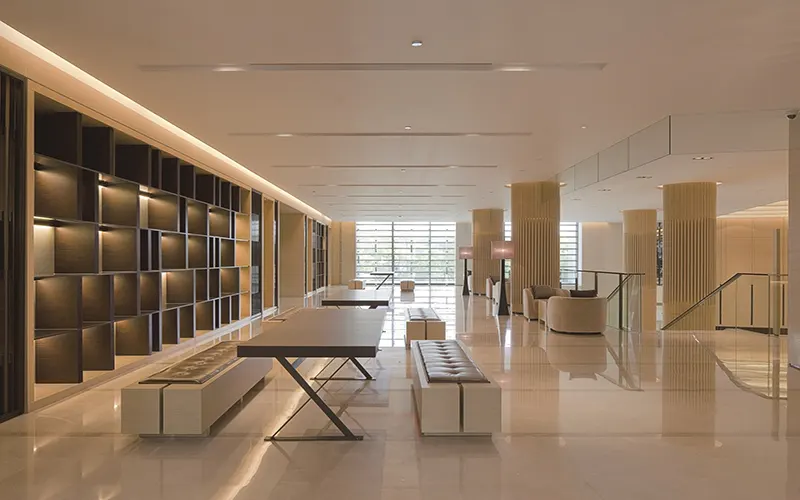
In curved walls, vaulted ceilings, or irregularly shaped ceilings, lighting is no longer an afterthought but directly participates in shaping the spatial form. It can outline the contours of the architectural surfaces while emphasizing the rhythm and harmony of the architectural structure.
How Do Bending Profiles Break Through Design Limitations?
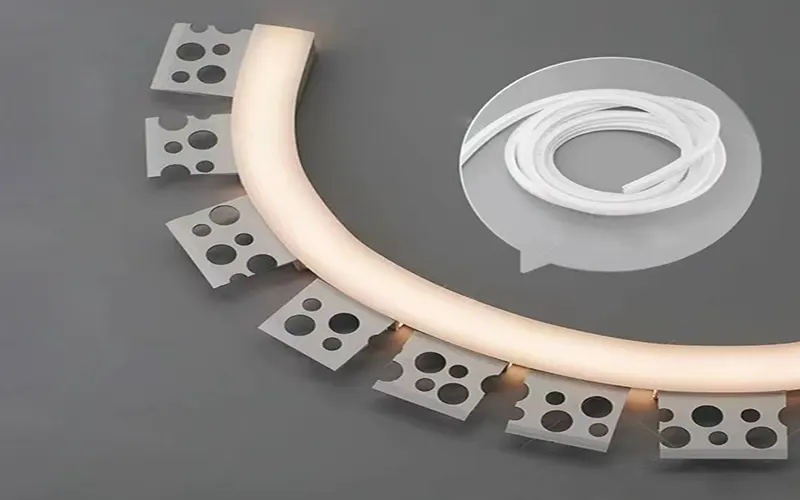
Free-form bending aluminum profiles represent a groundbreaking innovation in the design field, enabling lighting elements to adapt to virtually any shape or form.
Unlike traditional rigid lighting systems, free-form bending profiles offer exceptional flexibility, allowing them to bend in multiple directions, primarily left and right, making them ideal for curved walls, arched ceilings, and unique design elements.
This freedom allows designers to explore unconventional lighting patterns previously unattainable, such as waves, spirals, and curves. By utilizing these profiles, designers can create lighting installations that dynamically interact with the architectural structure of a space, adding depth and movement.
What is the Impact of Flexible LED Profiles on Modern Interior Architecture?
The use of flexible LED aluminum profile has had a profound impact on modern interior architecture. Today, architects and designers view lighting as a structural element rather than an afterthought. This technology enables the following:
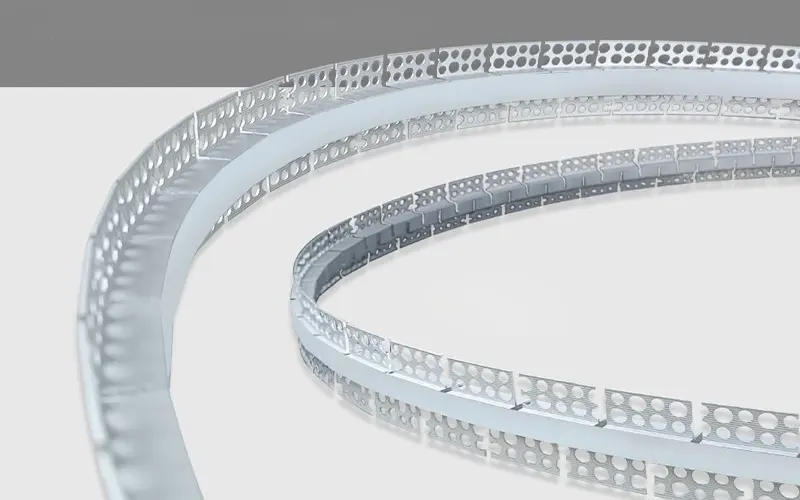
- Seamlessly integrates with curved walls and ceilings
- Creates a floating light and shadow effect
- Enhances the sense of spatial depth
- Provides dynamic accent lighting solutions
The relationship between light and architecture is becoming increasingly close, and lighting design plays a crucial role in defining space and creating atmosphere. Therefore, curved LED profiles are important for interior architectural lighting.
Where are Flexible Bending Profiles Primarily Used?
The versatility of flexible bending profiles allows for numerous applications in various settings, including residential and commercial lighting spaces. Below, we highlight some common applications:
- Curved Walls and Background Wall Lighting
Flexible profiles can be installed closely against curved background walls, achieving a continuous and uniform wall-washing effect and avoiding the “sawtooth” effect produced by traditional segmented lighting fixtures. - Cylindrical and Structural Columns
Wrap-around lighting not only enhances the sense of three-dimensionality but also reduces the perceived bulk of the columns, making them appear lighter. - Ceiling and Suspended Ceiling Design
Curved light strips can synchronize with the architectural curves, allowing for imaginative designs and creating a “floating” or “flowing” visual effect on the ceiling. - Staircases and Atrium Spaces
Spiral or gradually curving lighting enhances spatial layering while simultaneously providing functional lighting and ensuring safety.
The Designer’s Perspective: Flexible LED Aluminum Profile
From a lighting designer’s perspective, freely bendable profiles have completely revolutionized the creative design process. Designers can now:
- Experiment with various installation shapes
- Create dynamic lighting effects
- Seamlessly integrate lighting with architectural elements
- Achieve precise lighting results
- Meet client needs more effectively
Conclusion
Flexible LED aluminum profile have revolutionized interior lighting design, enabling designers to explore new installation possibilities and transform spaces in innovative ways.
As more designers and architects utilize free-form bending profiles, interior lighting will continue to evolve, with these profiles seamlessly integrating into architectural structures and enhancing our experience of space. Free-form bending aluminum profiles will remain a vital component of interior lighting in the coming years. For more information on our range of free-form bending LED profiles, please contact us.