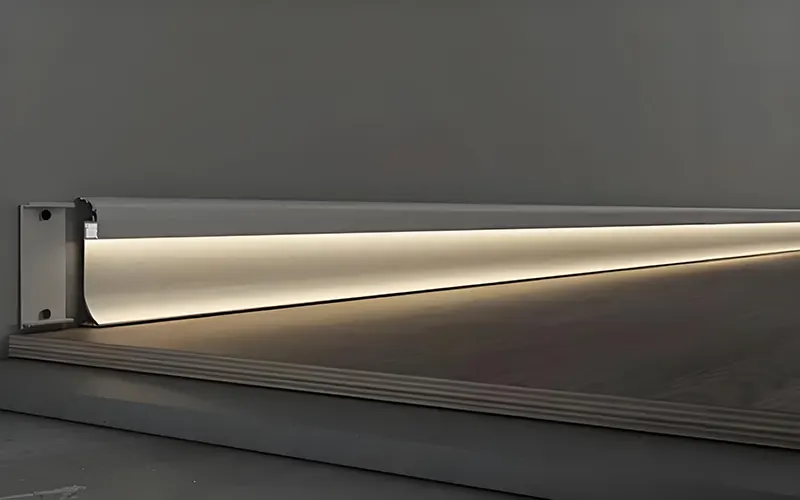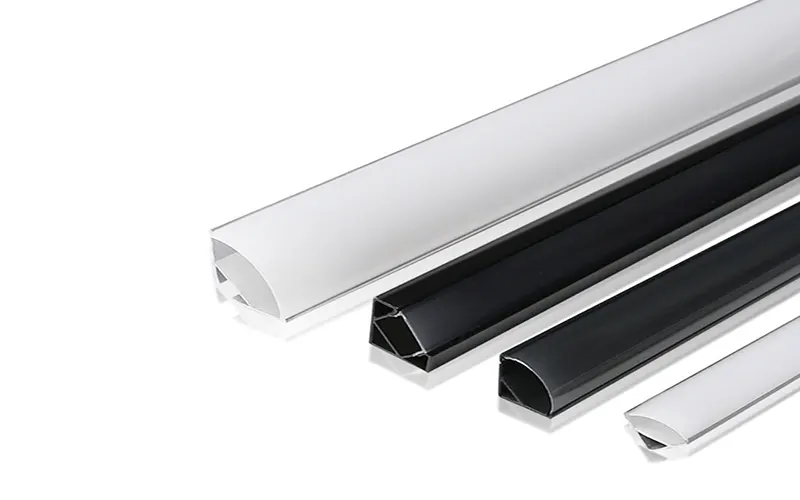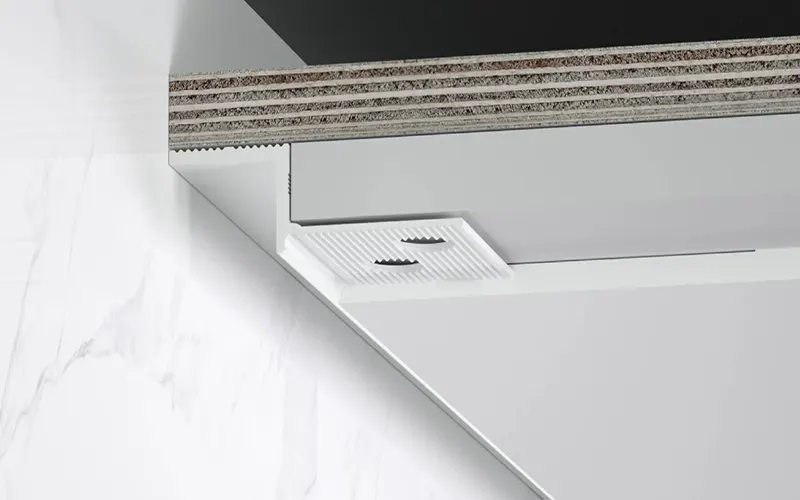
LED light strips have completely revolutionized modern lighting design, offering unprecedented flexibility in creating stunning illumination effects. They are now complemented by bendable LED profiles, specifically designed for installation on curved surfaces. By combining LED light strips with flexible aluminum channels, this solution provides a perfect system for achieving professional, seamless lighting effects on curved contours.
What are Flexible Aluminum Channels?
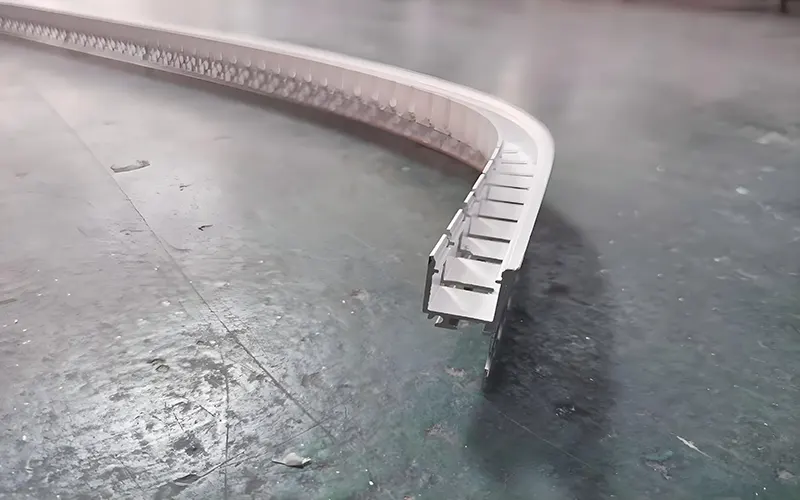
Ordinary LED profiles are straight and cannot be bent. Flexible aluminum channels, on the other hand, are specially designed profiles that can be bent to conform to curved surfaces, while providing necessary protection and heat dissipation for LED light strips. More information, pls check How Flexible LED Aluminum Profile Are Revolutionizing Interior Lighting Design?
Unlike ordinary LED profiles, these flexible channels employ precisely designed grooves or segmented structures, allowing them to bend smoothly while maintaining structural integrity.
Furthermore, they are typically equipped with flexible silicone covers, ensuring uniform light distribution and a clean appearance, while effectively protecting the LED light strips from dust and physical damage.
Choosing the Right Components
Choosing the right components is crucial for a successful installation. Look for high-quality LED strips and, when selecting a trough, ensure it is compatible with the width of the LED strip and has sufficient depth for heat dissipation.
For the most uniform light output, currently only silicone covers are available. They are milky white, which is especially important in curved surface applications.
How to Properly Install Flexible LED Profiles?
Before you begin installing any flexible LED profiles, ensure all electrical connections comply with local safety regulations. Use only UL-certified power supplies with enough wattage to meet your total power requirements plus a 20% margin.
Install appropriate circuit protection and ensure all connections are properly insulated. When using metal light troughs, be aware of sharp edges and always disconnect the power before making any adjustments to the system.
Planning Your Installation
First, develop a detailed installation plan, calculating details such as the length and power of the LED strips. Carefully measure the curved surfaces, including the inner and outer radii of each curve.
Calculate the total length (including curved sections) and add an extra 10% to account for any unexpected variations. Mark mounting points every 12-16 inches along the installation path. Note that the smaller the curvature, the closer the mounting points should be to maintain a smooth appearance.
Installation Tips for Flexible Aluminum channels
First, confirm with your supplier in advance that the flexible LED channels and diffuser cover are indeed bendable. Ensure that they can conform to the required curvature without buckling.
For surfaces with a tighter radius, the LED channel can typically be bent by hand. For surfaces with a wider radius, apply gentle pressure along the length of the channel to prevent deformation.
Finally, never bend the channel beyond its minimum bending radius (typically specified by the manufacturer). Secure the mounting clips first, then snap the LED channel into place.
Design Inspiration and Applications
Curved LED profiles offer countless ways to transform a space. Common applications include: recessed lighting in curved ceilings, under-cabinet lighting for rounded cabinetry, illumination for curved staircases, and accent lighting for curved architectural features.
Consider using color-changing RGB LED strips to create dynamic effects, or tunable white LED strips to adjust the ambient lighting atmosphere.
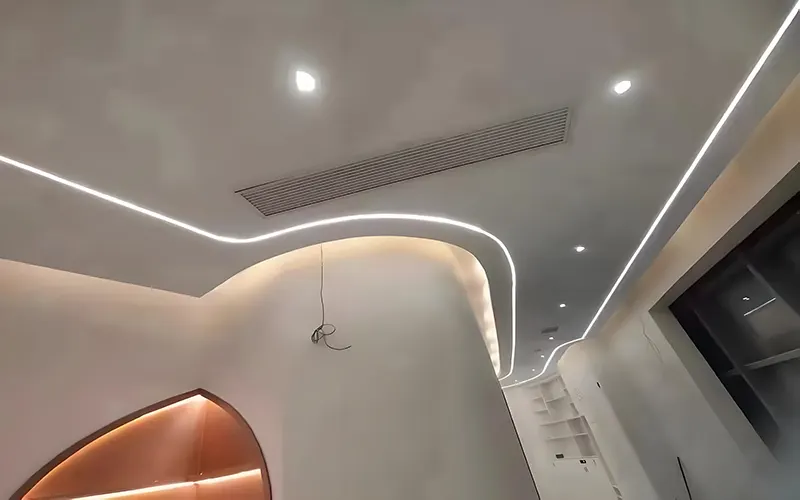
LED Strip Installation and Wiring
Before installation, thoroughly clean the LED strip and the mounting channel. If the strip needs to be cut, cut only at the designated marks. When inserting the strip into the channel, peel off the adhesive backing in small sections at a time to ensure proper alignment.
Complete all electrical connections before securing the diffuser cover. For installations in wet environments, use silicone end caps and waterproof connectors.
Conclusion
Installing curved LED light strips using flexible aluminum channels requires meticulous planning and close attention to detail, but the final result is guaranteed to be stunning. For more information on flexible aluminum channels, don’t hesitate to get in touch with us; as a bend aluminum profile supplier, we can help you achieve professional-grade lighting effects that enhance the beauty of any space.